
Homelessness: Enforcement without housing does not work

Nicklin MP Marty Hunt, Mayor Rosanna Natoli, Housing Minister Sam O’Conner and Cr David Law.
from David Law Division 10 Councillor
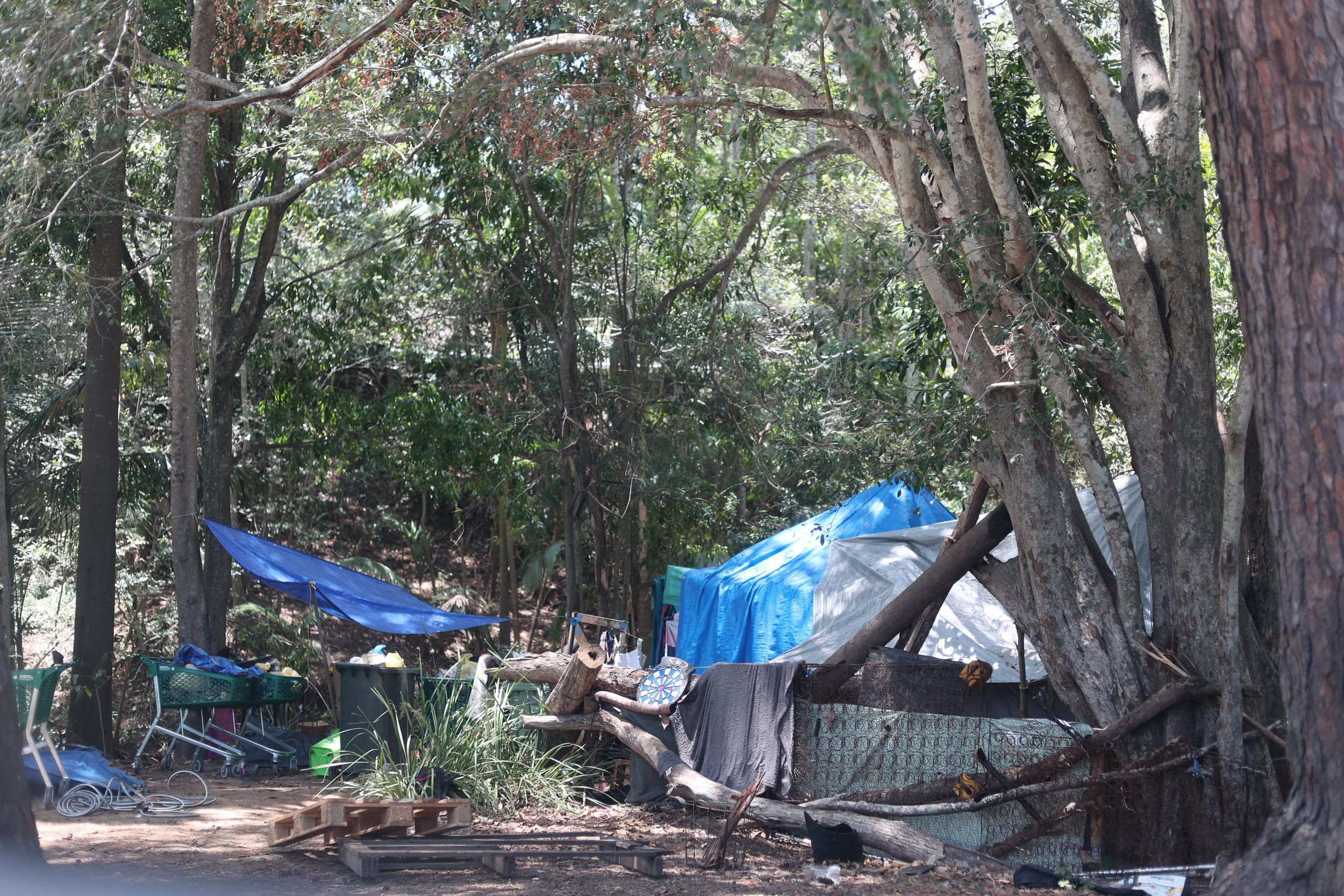
Seeing someone sleeping in a park or near a playground can be confronting.
Some say the answer is to “move people on.” I understand why that feels like a solution. Seeing someone sleeping in a park or near a playground can be confronting. People worry about safety. But homelessness isn’t just a Sunshine Coast issue. It is a challenge across Queensland, across Australia, and it is growing.
Across the country, homelessness has risen by 28 percent in five years. Why? Rising rents. Higher living costs. Limited crisis housing. Mental health struggles. Family breakdowns. People escaping unsafe homes. Homelessness is complex. It is not just about one thing in isolation, people become homeless for many reasons.
So why not just move people on? Because it doesn’t work. When someone is moved, they often return, or someone else takes their place. Without addressing the causes, it is a revolving door. Some councils have tried tough rules, like banning camping and rough sleeping everywhere. Moreton Bay did this recently, making all camping including rough sleeping on public land illegal. It led to camp clearances, threatened fines of more than $8,000, legal challenges and human rights concerns. Volunteers called the impacts cruel and destabilising. And the problem did not go away. It simply shifted to other areas. Trust in services dropped, making it harder to help. Housing and homelessness experts agree that enforcement without housing does not work. In fact, it often makes things worse.
On the Sunshine Coast, Council’s powers are often misunderstood. We manage illegal camping under Local Law No. 4, but camping and homelessness are not the same thing. Camping is usually recreational and involves setting up structures for leisure. Rough sleeping can sometimes look similar, with tents or makeshift shelters, but these are not for recreation, they are a necessity for people without a home. Our local law was designed to regulate camping for leisure, not to penalise people experiencing homelessness.
We cannot introduce exclusion zones around schools or playgrounds without major legislative changes, and any change must comply with the Human Rights Act 2019. That means our actions must be reasonable, proportionate and justifiable. These are often vulnerable people, not criminals and heavy-handed enforcement is not only ineffective but risks breaching fundamental rights.
When behaviour becomes unsafe or unlawful, Queensland Police have the powers to respond and continue to maintain a positive presence in areas like Nambour.
So what does Council do? Our focus is connection, not punishment. We work with local service providers and the State Government to link people with housing and support. Where safety concerns arise, we work alongside Queensland Police Service to keep the community safe and support those involved. But enforcement alone does not solve homelessness. It might clear a space for a short time, but it does nothing to address the reasons people are sleeping rough. Real solutions come from engagement and support.
To strengthen that approach, we have brought people together. Council established the Nambour Homelessness Response Forum, which brings State agencies, police, health services and local organisations around one table to coordinate short, medium and long-term actions. We also created the Nambour Homelessness Working Group, which includes local organisations, people with lived experience, businesses, community members and councillors. Their ideas are shaping practical solutions such as identifying sites for temporary accommodation and exploring models like day hubs and safe sleeping options. These conversations are about partnership, not blame, and they give our community a real voice in shaping what happens next.
Exclusion zones and crackdowns do not work. They create headlines, not solutions. Real change comes from supporting local services, advocating for more social and supportive housing, and treating every person with dignity and respect. You can help by contacting groups like IFYS, The Shack, Everyday Foundation, Nambour Community Centre, St Vincent de Paul, Salvation Army or local churches. Volunteer. Donate. Advocate. Change does not happen by hiding the problem. It happens when we pull together.
Homelessness will not disappear overnight. But with collaboration and courage, we can make sure the Sunshine Coast remains a community that cares, not just for those who have a home, but for those who need one.
Please contact me with any questions or comments at email: david.law@sunshinecoast.qld.gov.au and follow my Facebook page for regular updates: @DavidLawDivision10.