
Tiny homes bring new chapter for Woombye recovery village
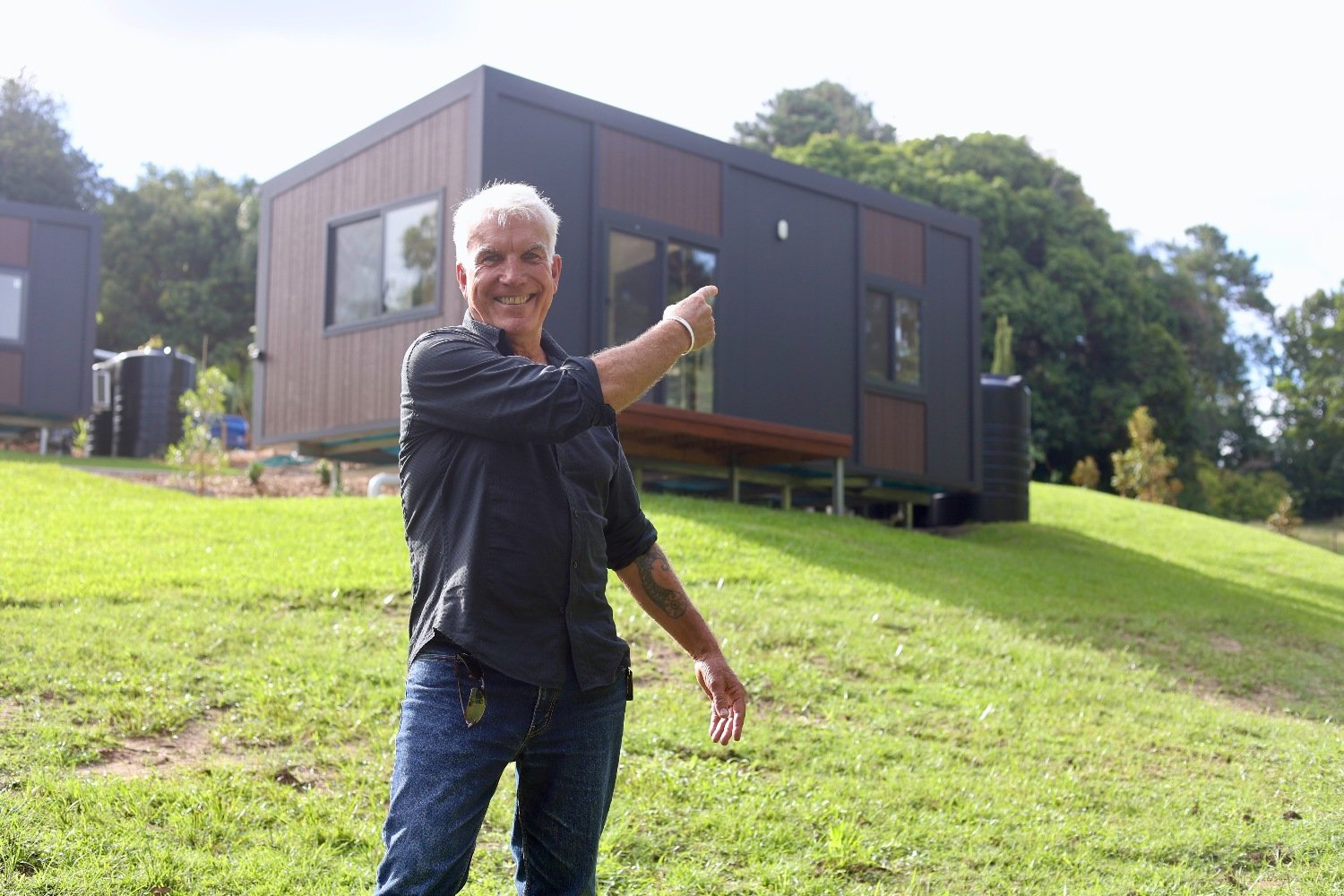
Mark Forbes at the village last week.
Eight newly completed tiny homes on its Woombye property mark the final stage of endED’s vision to provide practical, community-based support for vulnerable people.
endED was founded by Mark and Gay Forbes, who have turned their family’s experience into a lifeline for people living with eating disorders.
The endED charity was established 11 years ago after both their daughters developed eating disorders and the couple realised nothing in Australia was working as a residential model.
“We actually built Australia’s first residential eating disorder facility that is located in Mooloolah Valley. It’s called Wandi Nerida, and is now operated by the Butterfly Foundation,” Mr Forbes said.
House of Hope was the second stage of that vision, offering a non-clinical “step up, step down” day program for people leaving residential care, stuck on waiting lists or needing more than a standard outpatient appointment.
Around 15 allied health and community organisations now use the West Woombye property each week, including for yoga, counselling and small group programs in the gardens.
The final stage of the village has recently been completed with the building of short term accommodation and will be open from April 1.
“The whole village is finished now and includes a communal BBQ area, a playground and a community garden,” said Mr Forbes.
Formerly established and attended to by Teens Take Control on the Forbes’ property, the community garden was taken over by the couple after funding to Teens Take Control was cut.
“It was just too important a project to let it fold,” Mr Forbes said.
“The benefits of our participants becoming involved in the gardens, being in nature, learning to grow food and then hand that produce on to Urban Angels, who prepare meals for those in need, are enormous.”
As well as people who have attended the endED House of Hope for treatment and support for eating disorders, the tiny homes will also house participants of projects such as Deadly Pathways, a newly developed place-based support and outreach focussed program that supports program participants with a range of psychosocial interventions to improve social and emotional wellbeing to break cycles of violence, homelessness, trauma, justice and child protection involvement.
“There is always so much work to be done, but we are very excited about the opportunities and synergies this village offers.”
House of Hope eating disorder community support service
endED is a support service for people affected by eating disorders and eating issues. Grounded in lived experience and co-designed with their community, their services reflect what individuals and families truly need as they navigate recovery. Through compassion and professional care, endED hopes to remind others that they are not alone in their journey and that recovery is possible.
For more information go to www.ended.org.au.