
YADCA to host info session threat: Fire ants detected nearby as community briefing announced
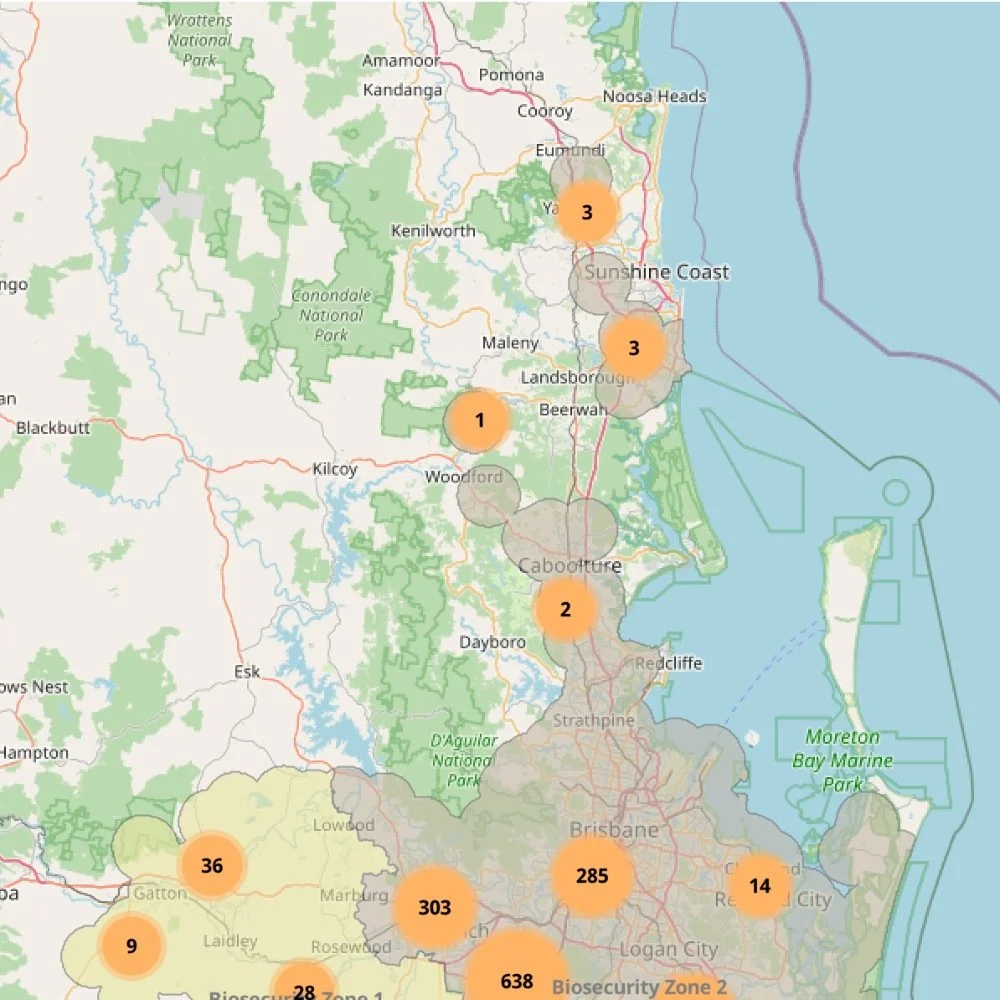
Fire ants appear to be spreading north. An infestation was discovered at North Arm. This follows a discovery last year at Forest Glen.
The Yandina and District Community Association (YADCA) is hosting an information evening on fire ants on Monday 9 February 2026 from 7pm at the Yandina Baptist Church Hall, 29 Low Street, Yandina.
Unfortunately the impact of this invasive pest – which was first detected in Queensland in 2001 – is now being felt by the Yandina, Ninderry, Bridges and North Arm communities.
Member for Nicklin Marty Hunt said fire ants posed a serious threat to Queensland’s health, environment, economy and outdoor way of life.
“I’ve been advised that without a dedicated and coordinated eradication effort, the long-term damage caused by fire ants could exceed that of foxes, camels, rabbits, feral cats, wild dogs, cane toads and other notorious pest species combined,” Mr Hunt said.
“To help keep our community informed, the Fire Ant Eradication Team will attend the upcoming YADCA meeting to provide information to residents and answer questions.
“I do want to be clear that this session is not intended as a forum to debate the science. It is a respectful, factual opportunity for locals to learn more about fire ants, understand how to identify them, and see how treatment and eradication works – including the chance to take home practical information resources.”
YADCA President, Marie Reeve, said residents need to be able to identify fire ant nests and be aware of the measures required to stop the spread, including the guidelines for moving material that may harbour fire ants such as soil, hay, mulch, manure, quarry materials, turf, and potted plants.
“Those affected have questions,” she said. “They want more information about where fire ants have been detected and the control measures being used.”
In May last year the National Fire Ant Eradication Program (NFAEP) destroyed a fire ant nest in Forest Glen. This was after a resident discovered and reported its location on a vacant block on 6 May. Palmview and Baringa are also marked on the NFAEP map as being hotspots.
Fire ants can travel in materials such as soil, hay, mulch, manure, mining and quarry materials, turf, and potted plants. Human-assisted movement is the biggest risk to their spread.
• Visit fireants.org.au or call 132 ANT (13 22 68) for more information. See the map at www.fireants.org.au/stop/map