
Candidates outline plans at Fisher forum
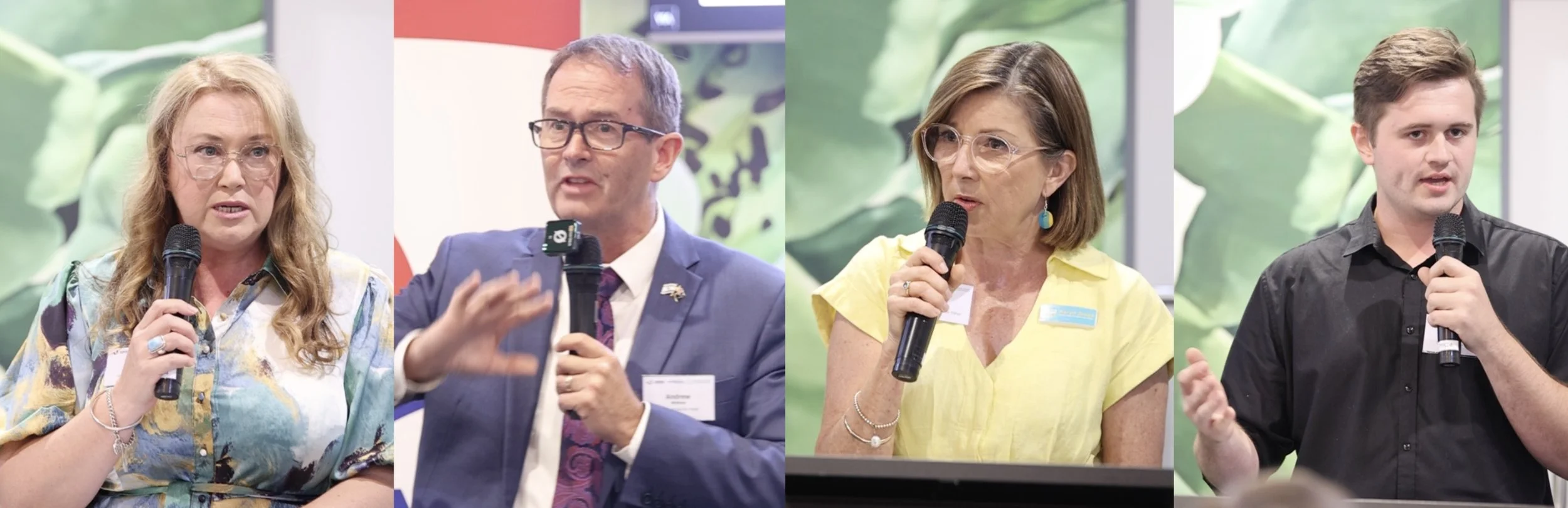
From left: Renee Wells (Greens), Andrew Wallace (LNP), Keryn Jones (teals/ Independent) & Morrison Lakey (ALP).
by Cameron Outridge
Infrastructure, energy costs and backing for small businesses emerged as the top priorities at the Fisher federal candidates forum on Tuesday night (April 16), giving voters a clear view of where incumbent Andrew Wallace (LNP), Morrison Lakey (Labor), Renee Wells (Greens) and independent Keryn Jones stand ahead of the May 3 election.
Held at Parklands Tavern and organised by local chambers of commerce, the meet-the-candidates event drew a business-focused audience keen to assess each contender’s plan for the region. With forecasts suggesting a minority government, key differences on economic strategy came into focus.
Track records and roadmaps
Andrew Wallace, who has held Fisher for nine years, opened by touting his infrastructure record. “I want the Sunshine Coast to be a place where our kids can grow up, where they can learn, earn, and retire,” he said. “The last thing I want is for young people to feel like they need to move somewhere else to get a decent job.” Wallace said he and Ted O’Brien had secured “the first downpayment on the rail into the coast of $1.6 billion” and criticised Labor for cutting funds for the Mooloolah River interchange and Third Avenue projects.
Morrison Lakey, describing himself as a “lifelong local,” defended the Albanese government’s economic stewardship. “When Labor came to office, inflation and interest rates were going up, and now they’re both coming down,” he said. Lakey said his family’s experience of relying on community support had shaped his Labor values.He proposed advisory forums to better understand small business needs and highlighted measures such as the extended $20,000 instant asset write-off and targeted energy bill relief.
Energy debates heat up
On energy policy, Wallace argued for an “agnostic approach” that included nuclear power. “You can’t run a full-time economy on a part-time energy system,” he warned, pledging more investment in gas and future nuclear stations. Lakey countered that renewable costs “continue to decrease every year” and pointed to Australia’s “greatest solar and wind resources.” Renee Wells dismissed nuclear as a long-term fantasy: “Nuclear power stations will not be built in a majority of people’s lifetimes. It will take 30 years to build these things.” Keryn Jones called claims that renewables drive up prices as “laughable,” blaming recent gas price hikes and policy uncertainty, and urged Fisher to become “the solar energy and wind energy global capital of the world.”
Backing small business
Wallace said “30,000 small businesses have gone belly up” under Labor and vowed to make permanent an instant asset write-off up to $30,000 and halve fuel excise. Lakey touted Labor’s small business grants and franchising code reforms. Jones promised her office would be “a go-to hub for business, helping access grants, cut through red tape, wade through regulation, and connect with the right support services.” Wells focused on “targeted federal investment in the clean economy, manufacturing innovation, especially in industries that are regenerative, circular and future-proof.”
With minority government prospects on the horizon, Lakey noted Labor’s Senate collaboration record, Wells welcomed constructive crossbench influence, and Jones argued independents “deliver better outcomes because they require negotiation, collaboration, and a focus on practical results.” Wallace warned that a minority parliament would be “dysfunctional.”