
Pastor Dowler urges action beyond police powers
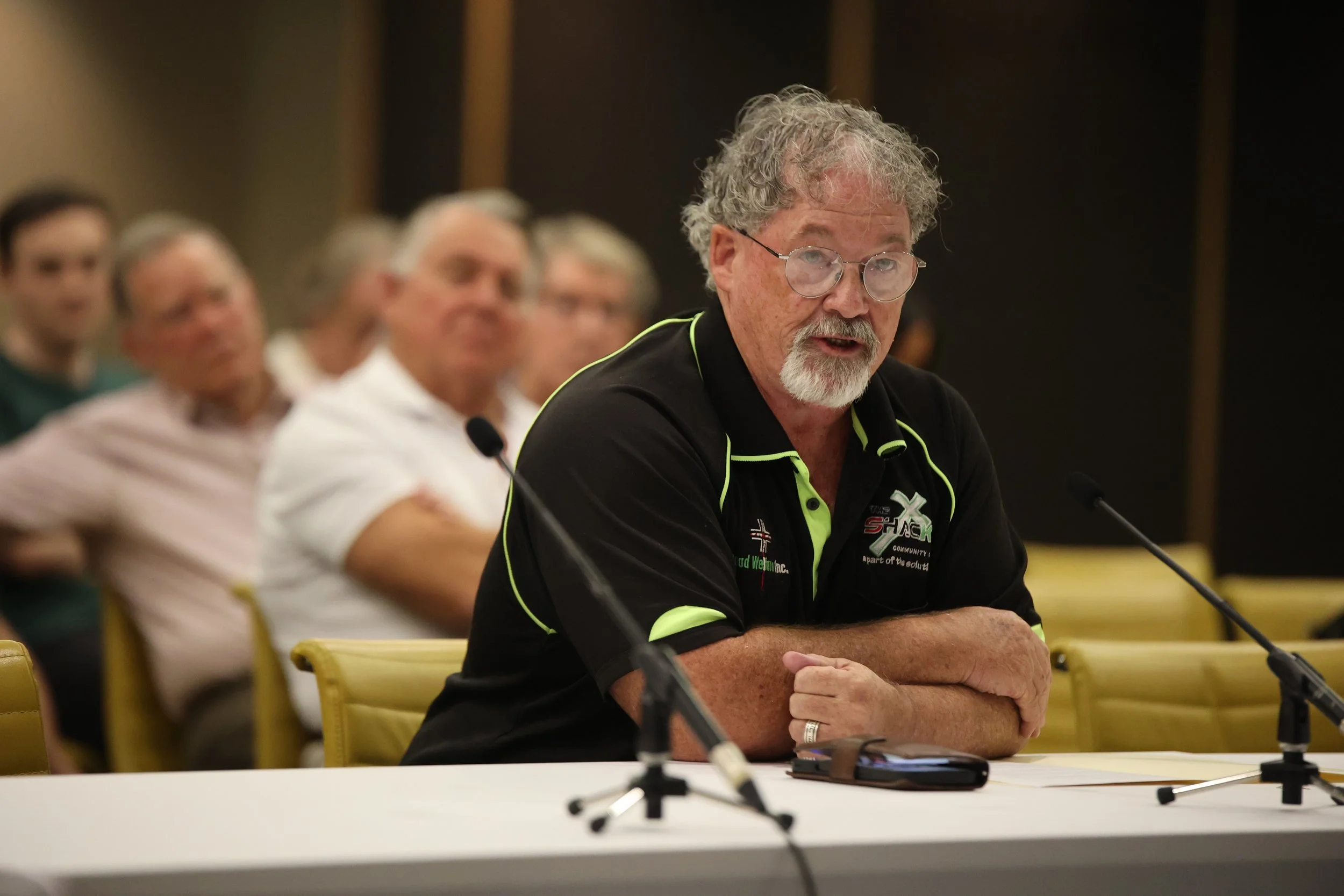
Pastor Dowler said real progress came, not from isolated programs, but from persistent, practical care.
The Shack Community Centre Pastor Dale Dowler OAM has told a parliamentary hearing in Nambour that tougher laws on anti-social behaviour may help, but warned lasting change would only come if the community tackled the deeper causes driving the crisis.
Speaking at the March 30 public hearing into the proposed Expanding Adult Crime, Adult Time and Taking a Strong Stance on Drugs and Anti-Social Behaviour Amendment Bill 2026, Pastor Dowler said he supported the bill “in principle” but made it clear legislation alone would not fix what he sees every day on the ground.
“Legislation alone will not resolve the complex and growing challenges facing our communities,” he told the committee. “Over 25 years of service within the community, I’ve witnessed a clear and concerning decline in behaviour, respect, and social cohesion.”
Pastor Dale, who with his wife Donna has led The Shack since 2002, spoke with long experience helping some of the district’s most vulnerable people. He said the problem had become so entrenched that trying to turn it around could feel “almost like you’re painting the Harbour Bridge”.
While welcoming more police resources, he said enforcement had limits. “I’m not convinced that enforcement alone will deliver the long-term change we seek,” he said. “A sustainable solution must be grounded in a stronger and more deliberate commitment to community values, personal responsibility … respect for heritage and pride in place. These are not abstract ideals. They are foundational to safe and functioning communities, and they must be actively promoted and reinforced. It’s also critical that in addressing crime, we do not lose sight of fairness and proportionality. We must avoid broad generalisations that unfairly stigmatise vulnerable groups. Not all individuals experiencing homelessness engage in anti-social behaviour, and not all those living with mental health challenges pose a risk to public safety. Effective policy must recognise these distinctions to ensure responses are both just and targeted.
“Over 25 years of service within the community, I’ve witnessed a clear and concerning decline in behaviour, respect and social cohesion.”
Pastor Dowler said substance abuse remained one of the biggest drivers of disorder and crime in the community, but argued too much of the response had focused on symptoms rather than causes. He was particularly blunt about the limits of existing drug diversion approaches, saying many had not worked effectively in practice.
“I’ve not really seen any of them work effectively,” he said.
“Shorter term ones … just don’t have any effect. It’s in the front door, out the back door.”
Instead, he argued for stronger, longer rehabilitation options and said “sometimes it may have to be mandatory”.
Pastor Dowler also used the hearing to champion wraparound support, saying real progress came not from isolated programs but from persistent, practical care. “It’s the 2am phone calls in the morning and the 3am phone calls in the morning that as a community, we probably need to be prepared to do,” he said.
He pointed to the success of supportive housing and warned against more empty discussion. “I don’t want to see another talk fest,” he said. “Talk fests are achieving nothing. All they are is that it’s a conversation. Let’s put some skin on the bones and make it happen.”
Pastor Dowler said trust was often the biggest barrier to helping people sleeping rough, and revealed that between a third and a half of those now seeking help in Nambour were coming from other areas. “I don’t want to see us doing to other communities what we’re seeing other communities doing to us,” he said.
Pastor Dowler acknowledged policing was part of the solution but if Nambour was serious about restoring safety, it could not rely on policing alone. “If we are to restore safety, confidence, and pride in our communities, we must act collectively, decisively, and with a shared commitment to solutions that address both cause and consequence.”