
Housing advocate calls for reform as homeless grapple with old systemic issues
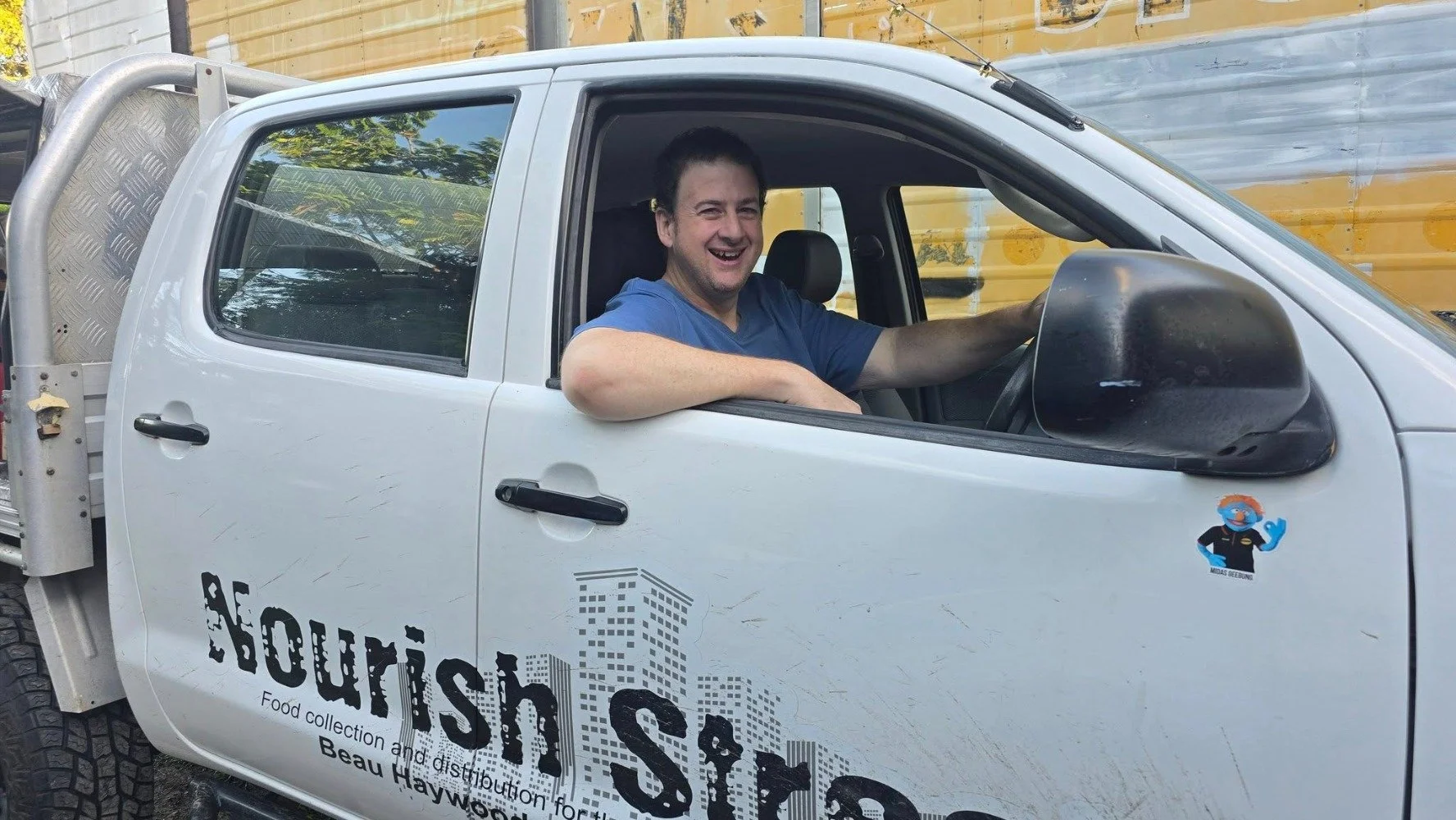
Paul Slater knows the situation on the ground. “The system as it stands isn’t working. We need to stop hiding behind statistics and start delivering real solutions.”
‘So deep and so broken. They’re setting people up to fail’:
By Cameron Outridge
Grassroots housing advocate Paul Slater says Nambour is being left to shoulder the burden of a broken system, as he called for a Royal Commission into the Department of Housing to help deliver the reform needed to turn the tide on homelessness.
Mr Slater, founder of Northwest Community Group Inc. (NWCG), has been at the forefront of legal and community action in Brisbane and Moreton Bay. His volunteer-powered organisation works along-side Nourish Street & supports over a thousand people each week, providing tents, food, emergency motel placements and advocacy for those with nowhere else to turn.
He told the Gazette that the challenges now visible in Nambour reflected the systemic failings he has seen across southeast Queensland.
The ‘big lie’ about refusing housing
One of Mr Slater’s strongest criticisms is the way housing statistics were presented to the public. He said government figures often claimed people are being “offered housing” but are “refusing it.”
“That’s the big lie that I’m challenging,” he said. “Most of them want accommodation. What actually happens is more nuanced. They’re offered two nights in a hotel, and then they’re back on the street where they have to re-establish themselves in a tent etc. Or they’re offered something miles away, in another town where they don’t have support networks or medical care. That’s not a viable option.”
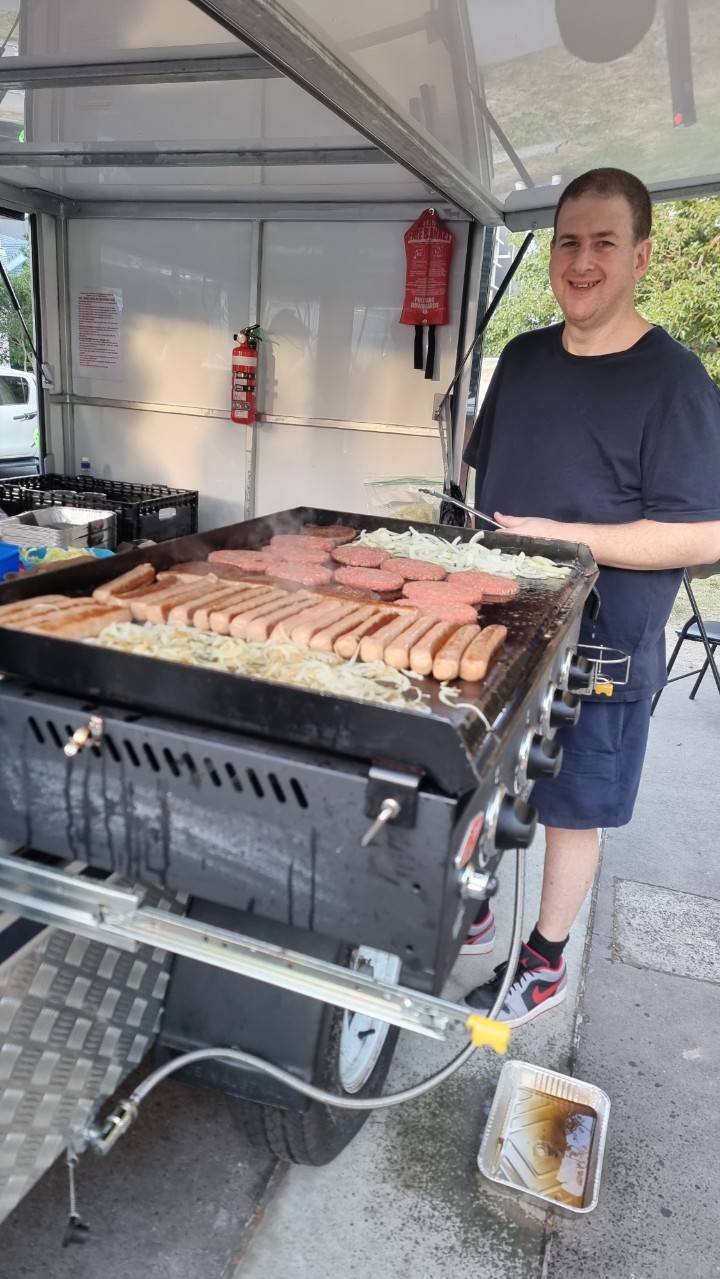
Paul Slater helps support over a thousand people a week.
He said presenting those refusals as people “choosing” homelessness misled the community. “It changes the public’s perception, but it’s not the truth. People are desperate for safe and appropriate accommodation – they’re not refusing it, they’re refusing set-ups that just set them up to fail.
“What we’re saying is that they need to offer them safe and appropriate accommodation. Don’t offer them somewhere up in Gympie when they live in Brisbane and they’ve got friends and other medical services that they’re used to using here in Brisbane.
“So we’re saying ‘look, you need to change the conversation’. Yes, obviously we all agree that everyone deserves safe public spaces and that behaviour is a concern. And of course, we don’t condone any behaviour that’s harmful of other people and antisocial.
“But these issues are by-products of a systemic issue that is just so deep and so broken. We have people getting released from hospitals directly into homelessness. We’ve got people getting released from prison directly into homelessness. They’re setting these people up to fail. They’re not providing them the services and the supports that they need, and then when they play out, they’re blaming them for it. It’s really gross.”
Mr Slater played a key role in a recent legal challenge in Moreton Bay, where the Supreme Court has temporarily stopped the City of Moreton Bay Council from clearing a homeless camp at Kallangur. The Court found the council had failed to consider residents’ human rights.
“My position of course, is that everyone’s entitled to housing. As far as I’m concerned, that should be a human right and everyone deserves that. At the same time I’m saying homeless people are still responsible for their actions. But we can’t move people on when we haven’t given them viable alternatives.
“And the actions of moving people on needs to be proportionate to the community’s wellbeing. I’m not saying you can never move people on. I’m not saying homeless people have more rights than other people to access a park. It’s proportionate and it’s got to be fair. But what we’re finding is that most people aren’t being offered stable accommodation or suitable alternative accommodation, then they’re being moved on. And that’s not okay.
“What we’ve proven, here, is that if you provide people with a rubbish bin, a toilet and a safe place, they actually do take pride in their area,” he said. “Shuffling people around without giving them alternatives isn’t a solution.”
He said he feared Nambour was now feeling the consequences of councils elsewhere taking tougher stances. “From what I can gather, Nambour’s copping it pretty bad,” he said. “But the council up there is somewhat more interested in a more humanitarian approach, which is excellent.”
Short-term options
Mr Slater said authorities should be moving faster on immediate short-term solutions, echoing similar calls by Nambour petitioner Helen Tagg. “We’ve seen during floods and bushfires how quickly emergency housing can be built,” Paul said. “We’re in an emergency right now – why not do the same?” he said.
He also recommended modular demountable housing on vacant land. “But, at the very least, give people toilets, showers and access to charities. Actually give them the chance to succeed instead of setting them up to fail.”
Proven models for long-term success
Mr Slaterpraised the “Common Ground” model used in South Brisbane, where supported housing complexes provided secure units alongside on-site services.
“Common Ground deals with people who’ve had long-term homelessness issues and have never been able to sustain a tenancy. Yet the average tenancy length there is 6.5 years, and 88 percent of residents move on to permanent housing. The statistics are amazing,” he said.
He said critics who feared such facilities would be “trashed” were mistaken.
“This model is actually designed for people with complex needs. It’s 24/7 supported living with wraparound services. It works, and it costs far less than the ongoing costs of policing, hospitals and emergency responses.”
Understanding local concerns
Mr Slater said he understood why locals were concerned about public safety and sharing community spaces with encampments.
“Hundred percent. A lot of people think that I’m encouraging people to stay in tents … and I’m the opposite.
“I don’t want these people in tents. I want everybody in safe accommodation and appropriate accommodation. Most of the time the homeless are well behaved and would understand that these areas are shared spaces … but even just spending a week out on the streets can have really detrimental effects to your mental health.
“These are extremely vulnerable people, with multiple traumas, medical issues and addictions that aren’t being treated. The longer someone is homeless, the harder it is to recover,” he said.
A call for reform. It isn’t working
While recognising the efforts of local councils and frontline charities, Mr Slater said the real blockage lay at a higher level.
“The Department of Housing needs a Royal Commission. There are too many layers of bureaucracy, too many mixed messages, and too much dishonesty about what’s really happening on the ground,” he said.
“The system as it stands isn’t working. We need to stop hiding behind statistics and start delivering real solutions.”