Celebrating Platypus Awareness Month
Wildlife news from Jennifer Berry, Wildlife Volunteers Assoc. Inc (WILVOS) 54416200 www.wilvos.org.au
The platypus is one of Australia’s most unusual native animals, and August is Platypus Awareness Month. Although platypuses rarely come into care, anyone who finds one injured, trapped or in distress should contact the WILVOS 24-hour hotline on 07 5441 6200 or transport it to Australia Zoo Wildlife Hospital as soon as possible.
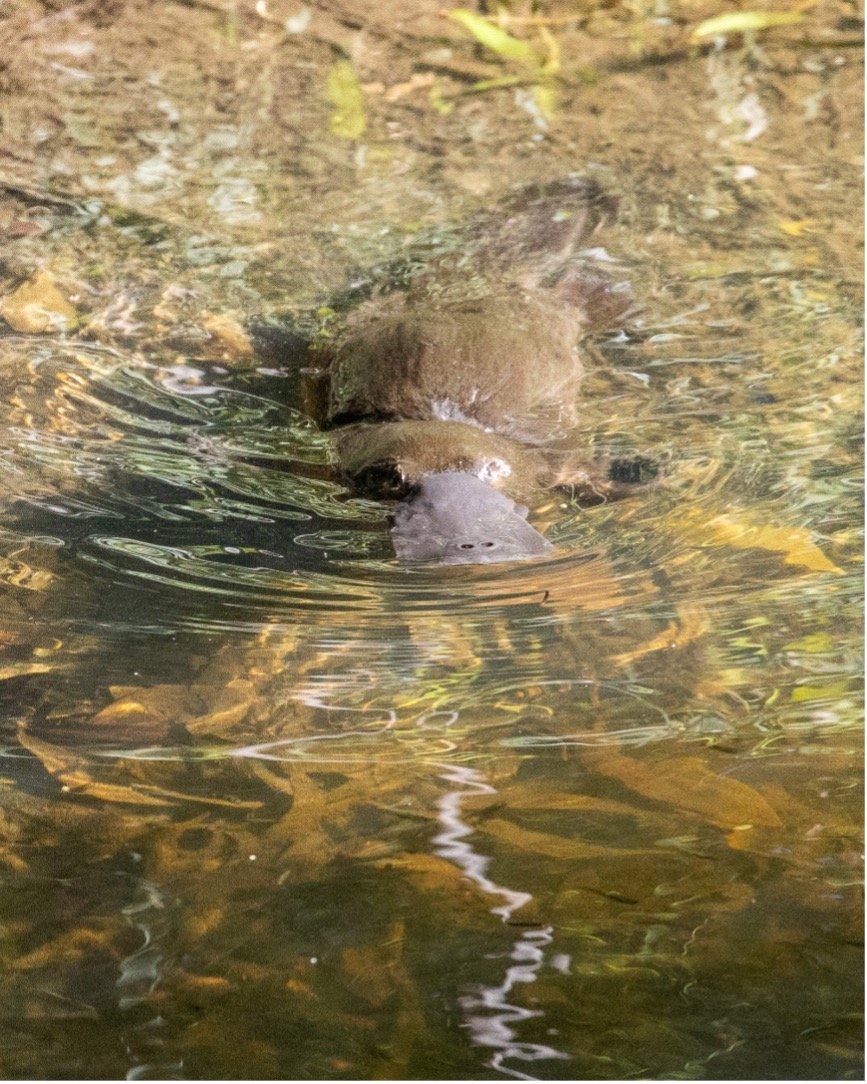
With its duck-like bill, webbed feet and thick waterproof fur, the platypus spends much of its life in quiet creeks and rivers across eastern Australia. Shy and difficult to spot, it plays an important role in freshwater ecosystems by feeding on insects, worms and small aquatic creatures.
Sadly, platypuses face growing pressure from pollution, litter, land clearing and damage to riverbanks. Plastic bags, fishing line and other rubbish can trap or injure them, while poor water quality reduces the food they need to survive. As towns and cities expand, protecting healthy waterways is more important than ever.
Everyone can help. Planting native trees and shrubs along creek banks reduces erosion and creates shelter for wildlife. Picking up litter, recycling, and disposing of fishing gear responsibly keeps creeks cleaner. Farmers, councils and community groups can also restore damaged streams and protect native vegetation.
A glimpse of a platypus gliding silently through clear water is a reminder of how precious our natural environment is. By caring for rivers and creeks, we protect not only platypuses but also the many native plants and animals that share their habitat.
Every small action, from reducing pollution to planting native vegetation, makes a difference. Working together will help future generations continue to enjoy the wonder of this remarkable Australian animal thriving in healthy waterways.
Warning!
Adult males have poisonous spurs on their inner hind ankles which can cause severe pain and swelling. If you do need to rescue a platypus, never place your hands under the animal or support it from below using your arm or leg; instead, lift the platypus by gripping it firmly around the end half of the tail (but not the tail base, which a male can reach with his spurs). The Australian Platypus Conservancy website has more information on how to rescue platypuses safely.