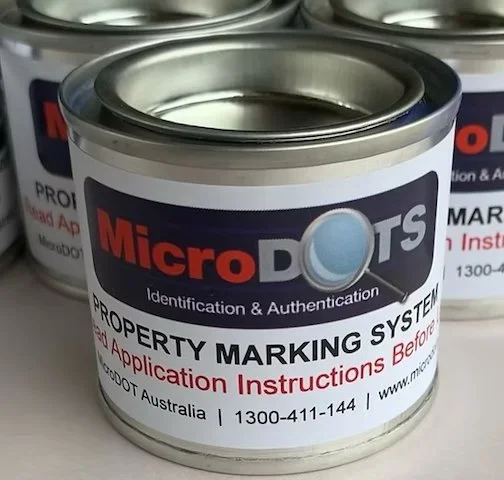
A security specialist who contacted the Gazette after recent coverage of theft in Nambour says businesses may be overlooking two security options: make stolen property traceable; and make offenders traceable too.
MicroDOT Australia managing director Neil McCormack said the company had spent more than 24 years developing theft-deterrent programs and believed they could help businesses across Nambour.
“I’d be very confident of being able to have a strong impact upon the theft issues that Nambour and surrounding districts are facing,” he said.
MicroDOTS are essentially a modern form of property marking. Tiny metallic dots carry a unique identifying code registered to the owner. They can be brushed or sprayed onto tools, computers, machinery, copper cabling, vehicles and other valuables.
Because many dots can be placed on one item and are difficult to see or remove, recovered property can potentially be linked back to its owner by reading just one.
Meanwhile, warning signs and stickers tell would-be thieves the property is marked for police identification. MicroDOT Australia says commercial applications range from tools and plant to office equipment, vehicles and building materials.
The second approach turns the principle around: instead of marking the property, DNA Guardian marks the offender at the scene of the crime, at the time the crime occurs. With over a 97% success rate of deterring crime, it is very powerful and cost effective.
The ceiling-mounted system can connect to an alarm, panic button or remote monitoring system. Once armed, a motion sensor triggers a fine mist carrying a unique synthetic forensic DNA marker and UV-visible trace as an offender passes through the protected area. The code is specific to the premises, while the manufacturer says the otherwise invisible marker can remain detectable for weeks on skin and for months or years on stolen items, providing a link back to the crime scene for years.
Mr McCormack said his company was also working on theft-deterrent projects involving power infrastructure and together with DNA Security Solutions they are developing an outdoor prototype aimed at copper-cable theft from EV charging stations.
He contacted local organisations after reading the Gazette’s coverage of theft and community safety, but said the response had been limited.
“I know that theft deterrent measures aside from CCTV and alarms aren’t well-known, but they do provide much stronger results and feelings of safety and well-being in the community,” he said.
“For businesses with valuable tools, stock, equipment or exposed cash-handling areas, businesses can do more than just record theft via CCTV — they can make stealing much harder and riskier in the first place for the criminal.”
microdotaustralia.com.au | 1300 411 144 | neilm@microdotaustralia.com.au.