Landowners sound alarm over Blue Heart erosion: Tidal gate removals blamed for Yandina Creek damage
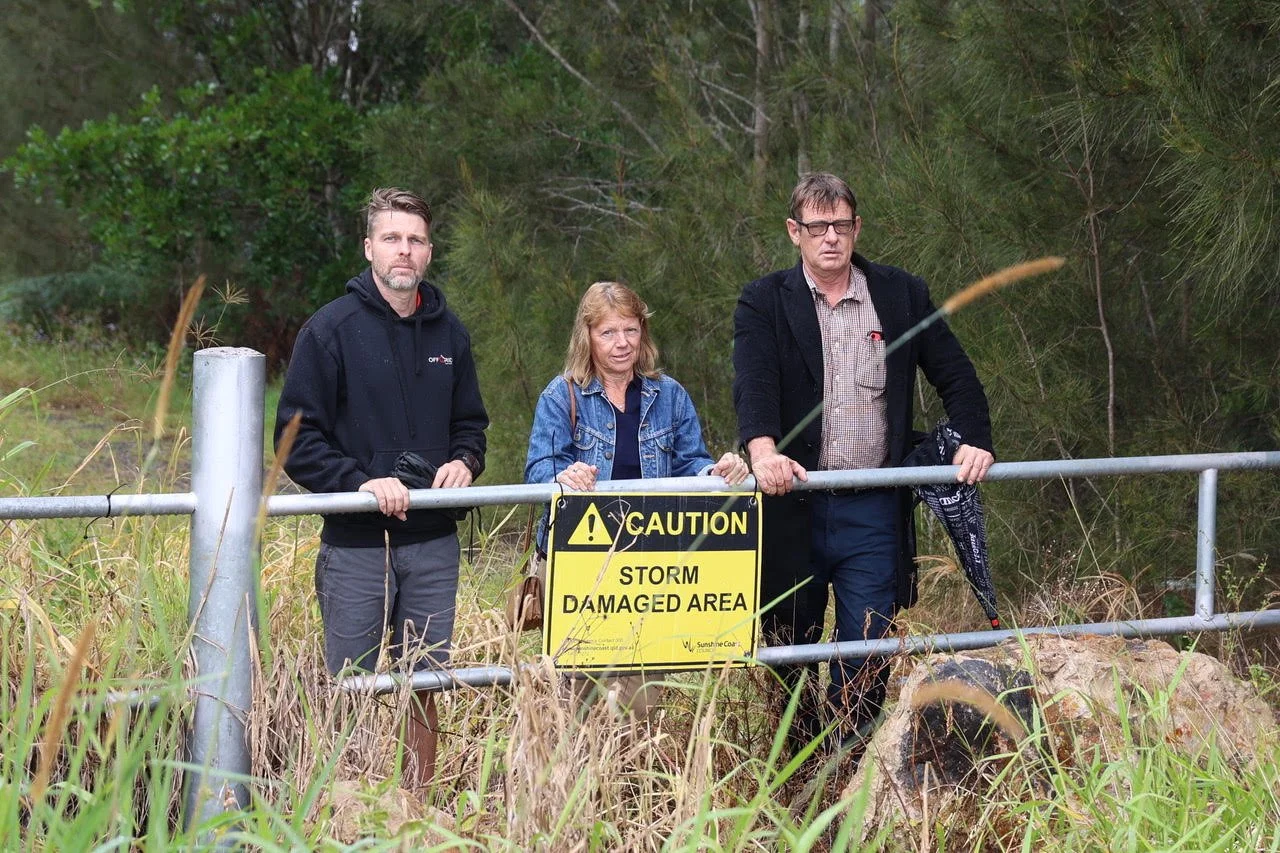
MFLA Member and River Road resident Greg Hack, Maroochy River Farmers and Landowners Association Secretary Bernadette Surveson and Maroochy River Farmers and Landowners Association president Paul Brandenburg.
The removal of historic tidal gates from former cane lands is being blamed for accelerating erosion along Yandina Creek, with a local landowners’ group warning that collapsing banks are sending large volumes of sediment into the Maroochy River.
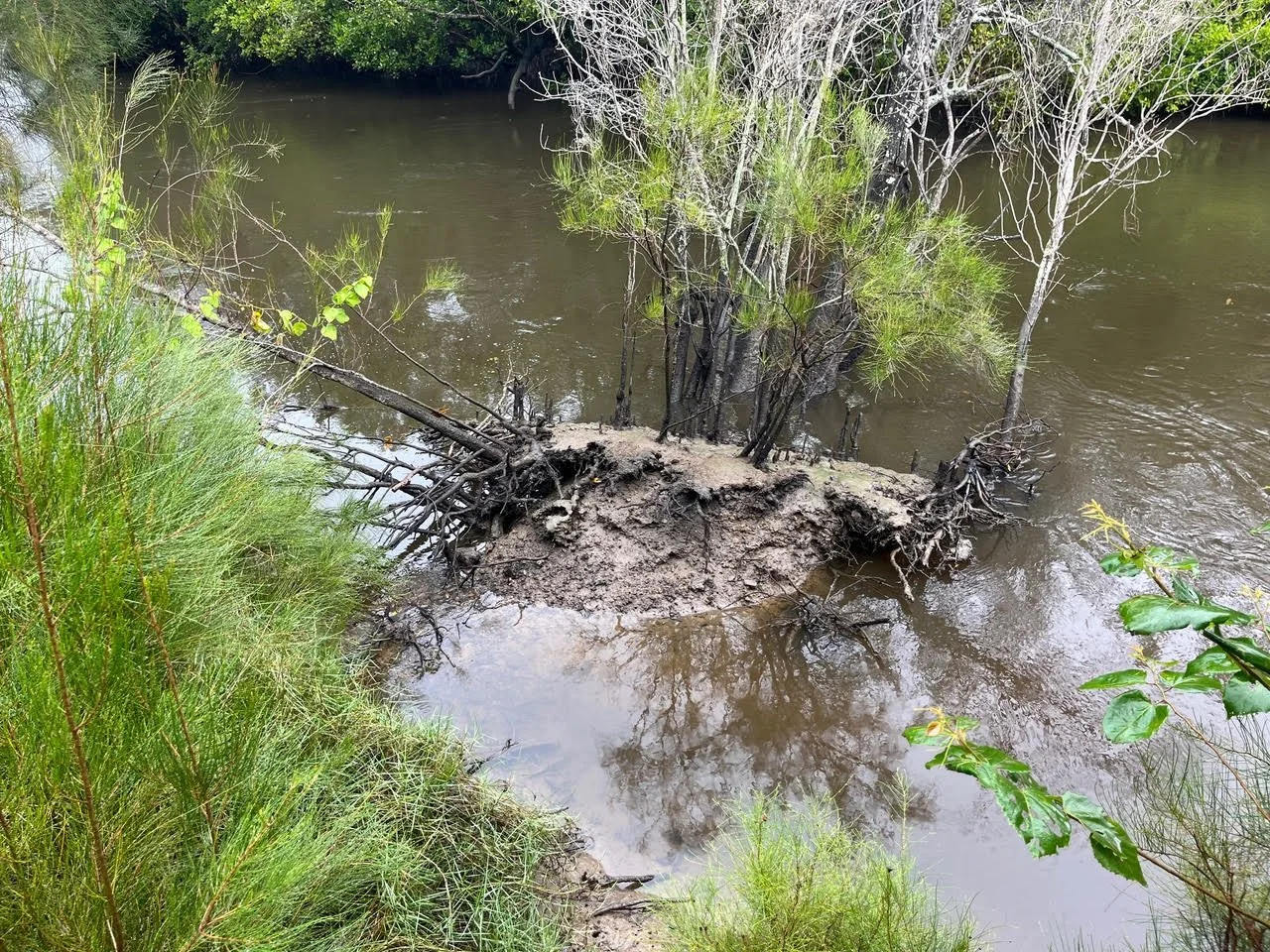
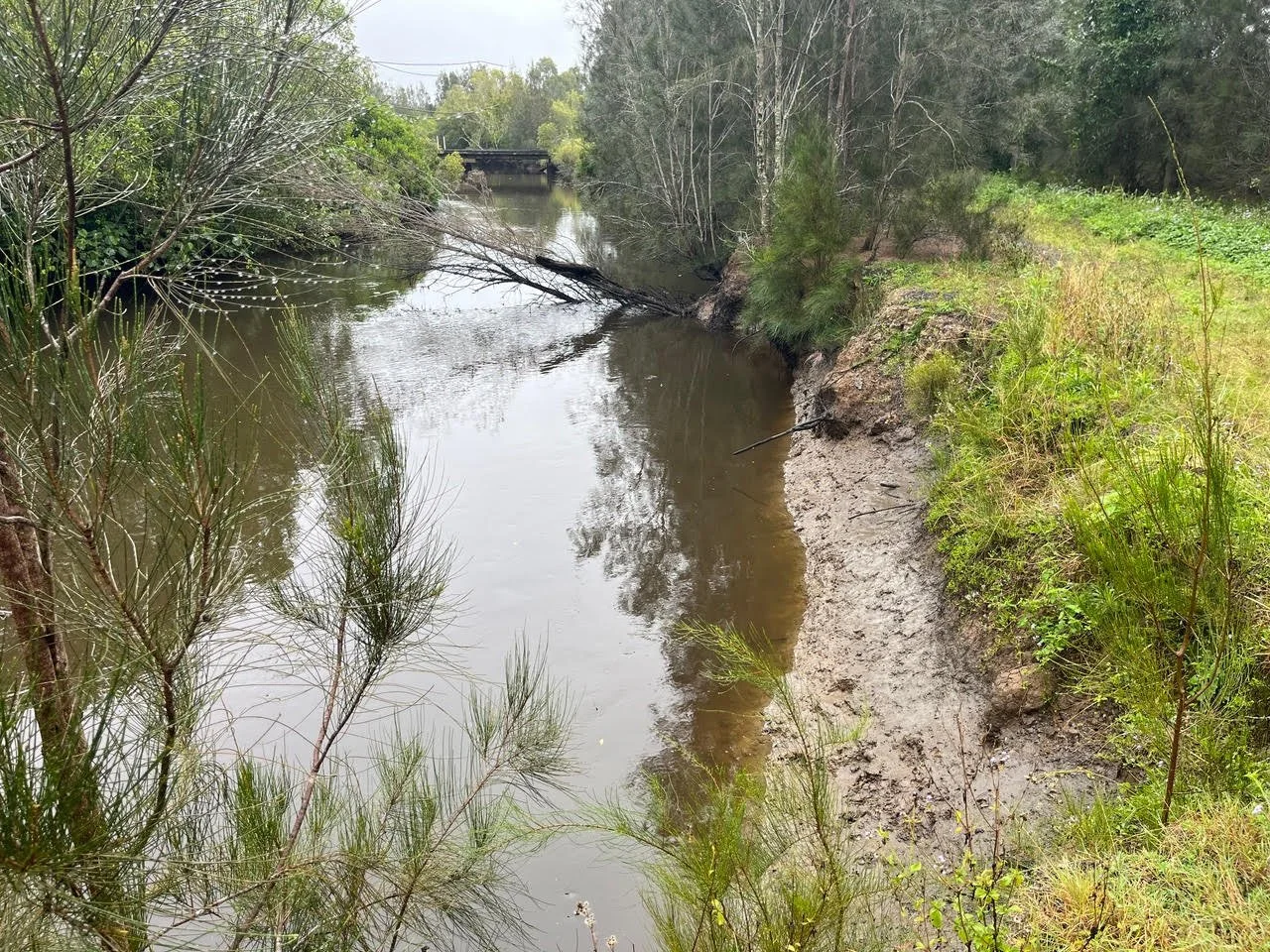
Maroochy River Farmers and Landowners Association president Paul Brandenburg said increased tidal flows associated with the Blue Heart project had widened the creek, undermined trees and damaged sections of a designated public walking track.
Sunshine Coast Council’s Blue Heart project encompasses 5000ha of agricultural land and flood plain north of the Maroochy River. The initiative aims to ensure flood storage on the Maroochy River flood plain and is also a blue carbon pilot project.
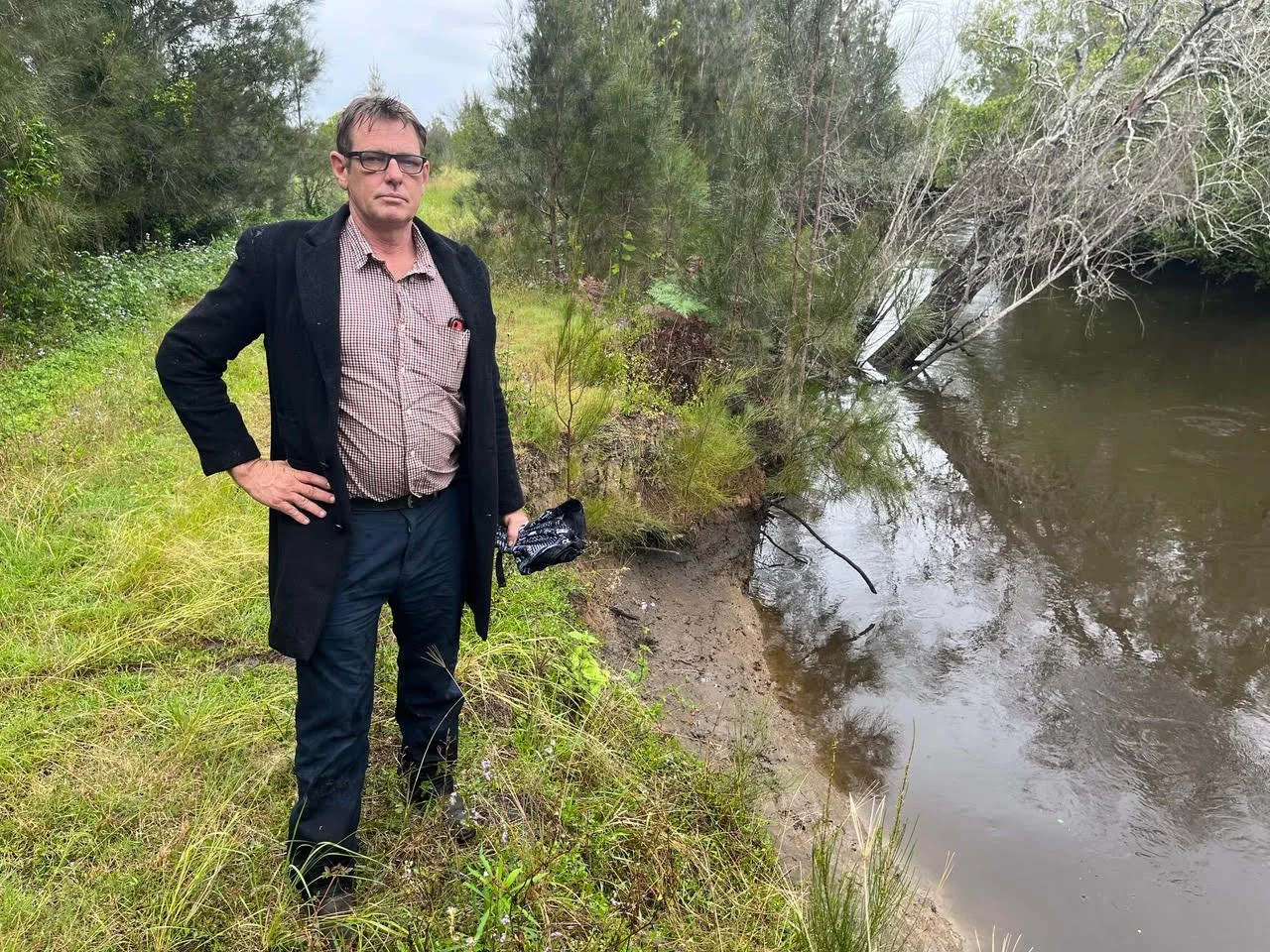
During an inspection of the site, Mr Brandenburg pointed to steep, freshly exposed banks and areas where the bank was breaking and threatening the public walking track.
He said the damage was an unintended consequence of removing tidal gates that had regulated water movement through drains built across the former sugarcane fields.
The gates acted like one-way valves, allowing freshwater to drain from the farms while preventing saltwater from travelling inland during high tides.
Although the land sits above the river, Mr Brandenburg said the man-made farm drains were dug below tidal level, making the gates essential to preventing saltwater intrusion. He said the land had never been inundated with salt water until the Blue Heart project and it was having a devastating effect and working against what nature intended.
“When you pull all the gates out, it’s unnatural the amount of water that has to be displaced,” he said. “The velocity and volume in one tidal exchange has tripled through this small creek. You can’t hold back the Pacific Ocean.”
Mr Brandenburg said the stronger flow was progressively scouring the creek banks, carrying soil downstream into the Maroochy River.
“All of that soil is going to fall in the river in the creek and get washed out of the river,” he said. “And they talk about the water quality of our river.”
He believes the sediment entering the river could be contributing to its declining environmental health and has called for a detailed investigation into the relationship between the gate removal, creek erosion and water quality.
Mr Brandenburg also claimed Aboriginal artefacts could be among material being lost from the banks because the area had historically been used by First Nations people. First Nations clans would camp on the creek bank as it was an abundant food source where salt meet fresh water and a spiritual line, in traditional culture.
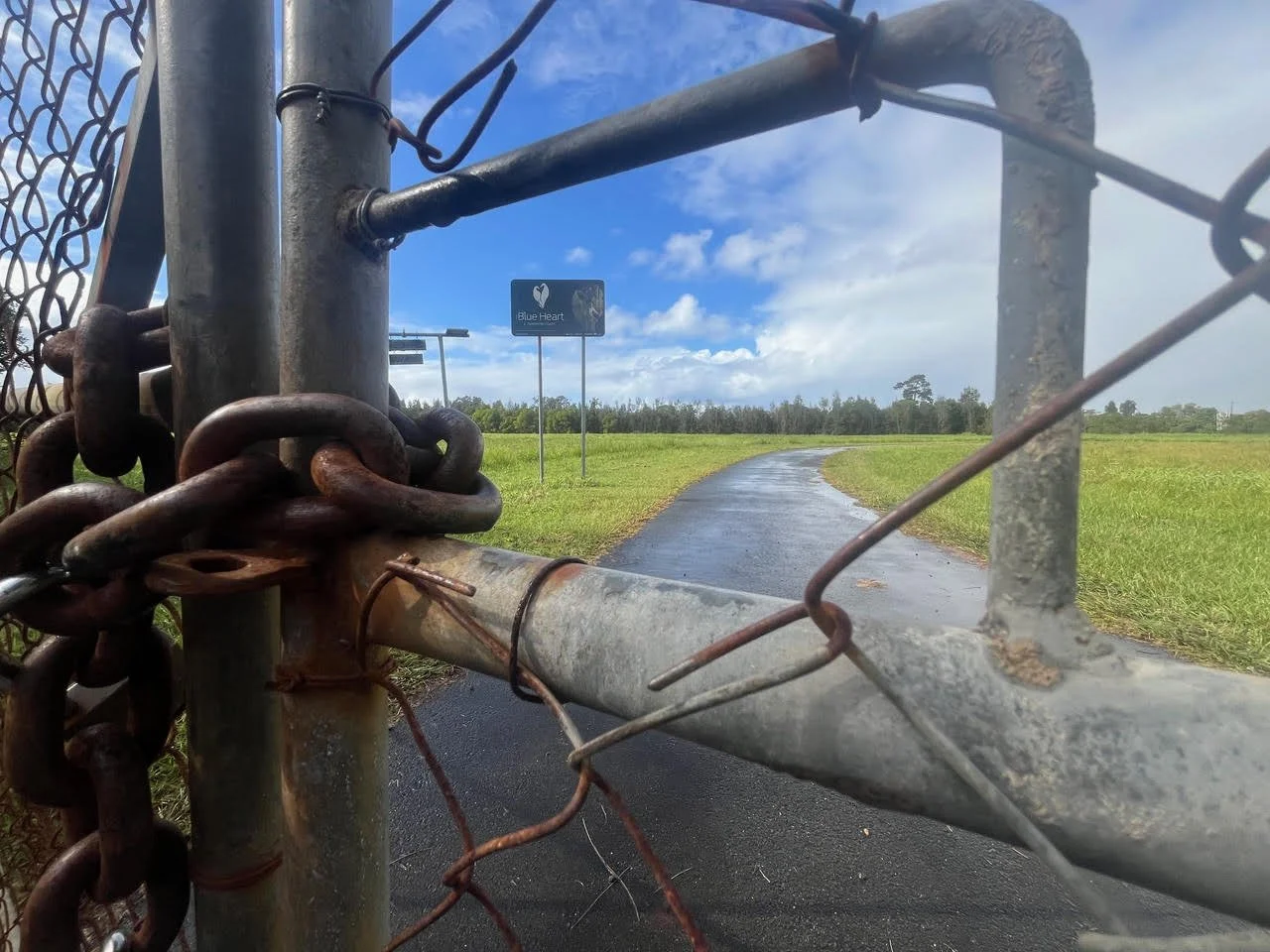
Mr Brandenburg said the most immediate concern was the condition of the walking track, which remains accessible despite sections running close to unstable banks.
"This is dangerous,” he said. “If this were a building site, it’d be shut down in an hour. You’d have environment, workplace, health and safety writing rectification orders."
Mr Brandenburg said in response only one little corflute had been installed warning visitors of "storm damage".
He is calling for the affected area to be completely fenced and closed until it can be assessed and made safe.
Mr Brandenburg said his association supported genuine environmental restoration on a freshwater basis. It questions whether converting former freshwater farmland into a tidally influenced saltwater system had any merit.
He also raised further concerns about Blue Heart proposals involving carbon sequestration, nutrient management and the role of treated wastewater within the broader Maroochy River catchment.
Mr Brandenburg said the whole Blue Heart project was rushed. He urged authorities to slow the tidal flow by reinstating gates and begin stabilising and revegetating the creek banks.
“What you have to do, you’ve got to put all the gates back in and slow the flow down,” he said. “Then they’re going to have to go and rehabilitate all these banks.”
Mr Brandenburg said the association had collected council records, technical reports, correspondence, environmental data and Right to Information documents relating to the project.
He said the project raised broader questions about planning approvals, public expenditure, land management and the long-term future of the Maroochy River floodplain.
Standing beside the damaged creek, Mr Brandenburg said his motivation was to ensure the environmental consequences were not overlooked.
“I say to people all the time that Mother Nature doesn’t have a voice in this situation,” he said. “So who’s going to be Mother Nature’s voice?”
Council 'responding to climate change'
A Sunshine Coast Council statement said Council was committed to adapting to change in the Blue Heart area in sustainable ways and to working alongside landholders in response to a changing climate, including inundation associated with sea level rise.
“Council’s Blue Heart blue carbon project has been informed by detailed planning and investigations, including hydrology modelling independently reviewed by the CSIRO and supported by all necessary state and federal approvals. Blue Heart partners continue research and monitoring across the project area, including hydrology, biodiversity and water quality outcomes.
“An independent assessment has identified five factors for bank erosion on Yandina Creek, including historic clearing of creek bank vegetation, recent rainfall and flooding, hydrological changes linked to tidal wetland rehabilitation, natural channel movement of an outside creek bend and natural floodplain reconnection processes. Independent water quality monitoring indicates no increase in turbidity (sediment indicator) levels in Maroochy River immediately upstream or downstream of Yandina Creek.
“Council has assessed public safety at the site. When entering any Council managed environment reserve, we urge community members to follow signage advice for their safety.”
There is more information on the Blue Heart project webpage: www.sunshinecoast.qld.gov.au/council/planning-and-projects/major-regional-projects/the-blue-heart.