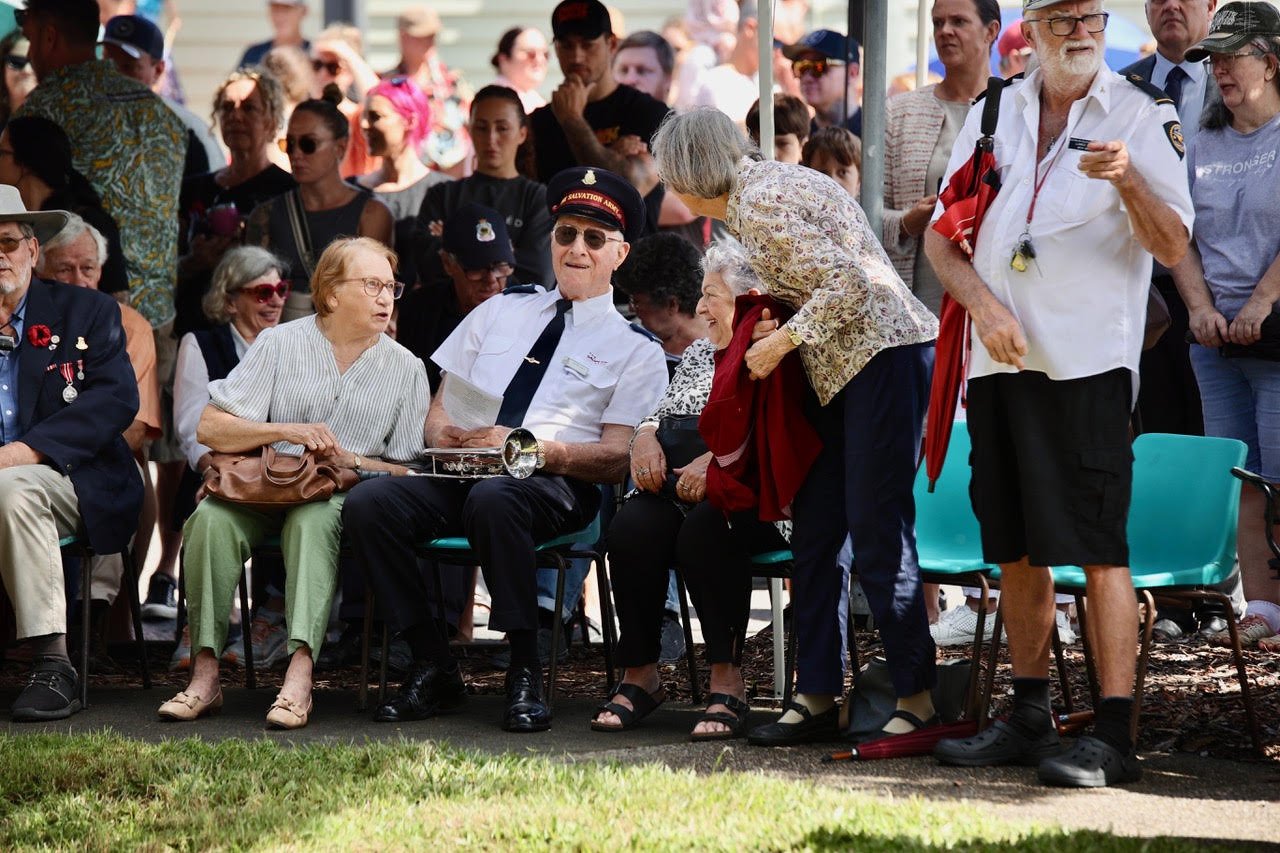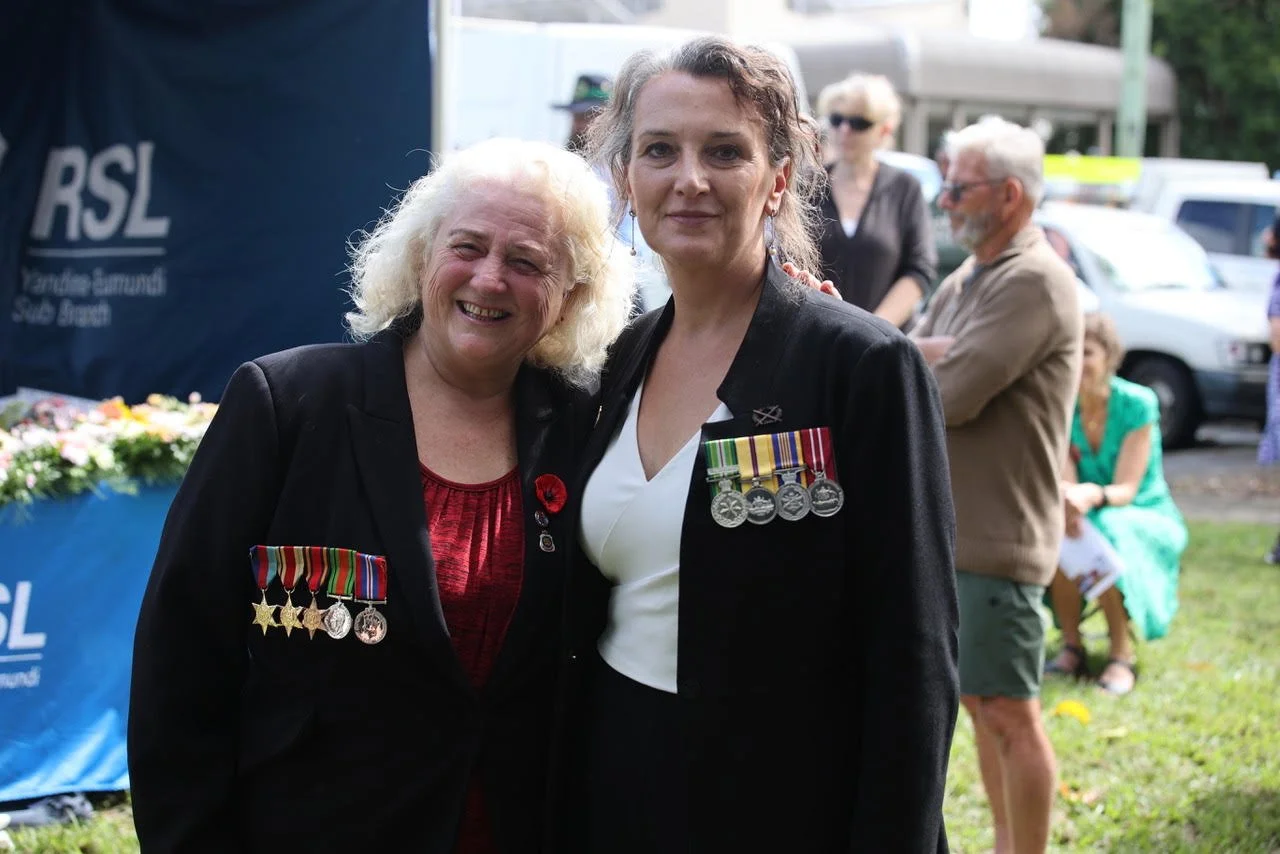
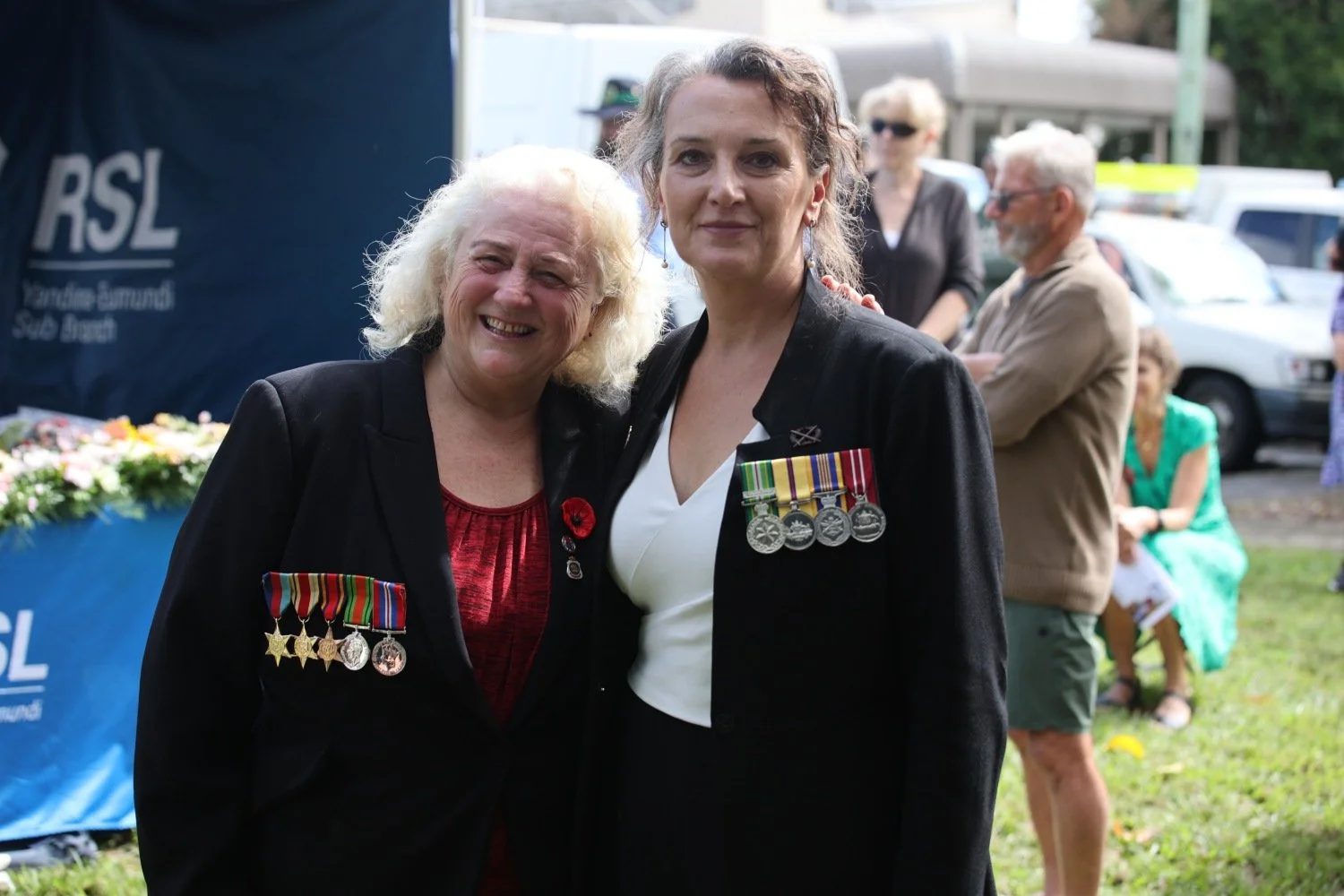
Fomer Army Captain Sam Payne (right) with Yandina/Eumundi RSL President, Tracy Gilmartin at the Yandina ANZAC Day service.
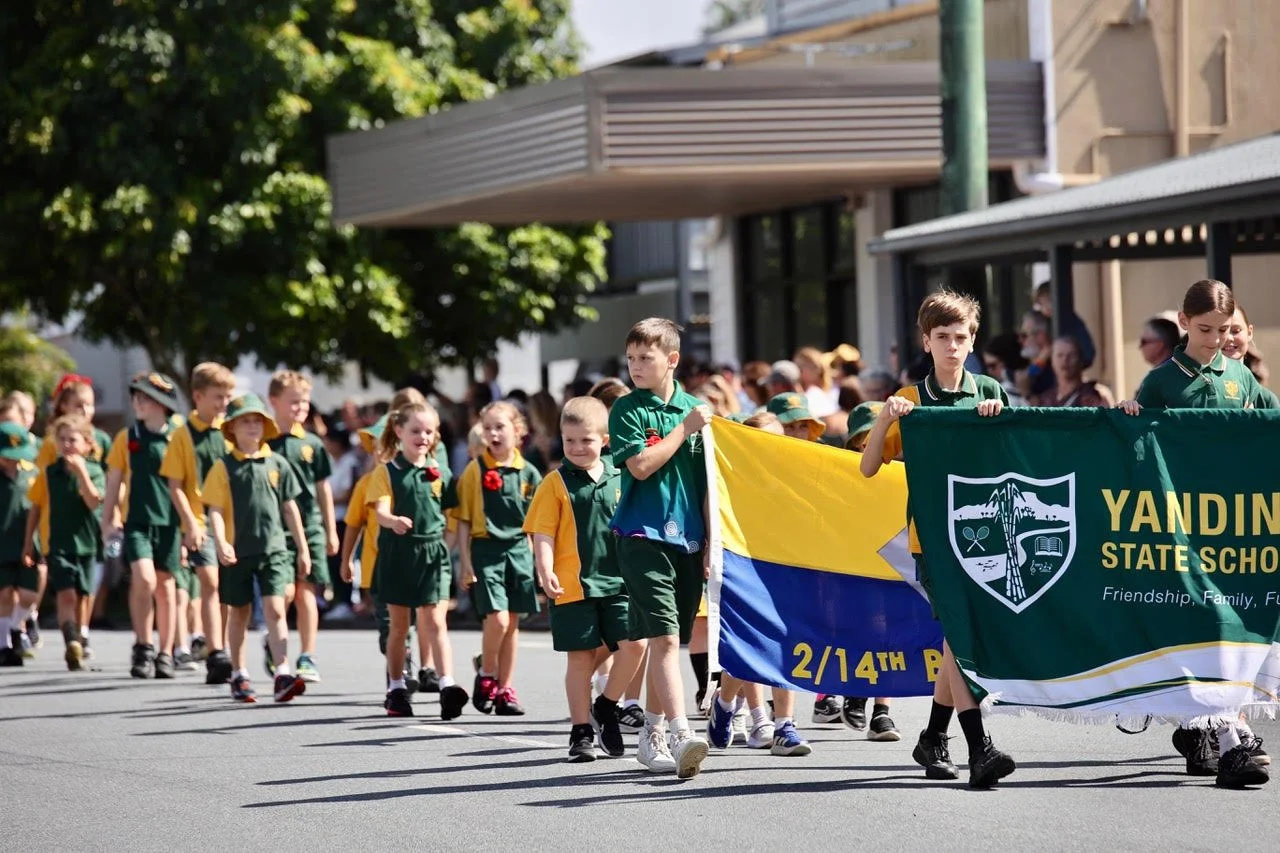
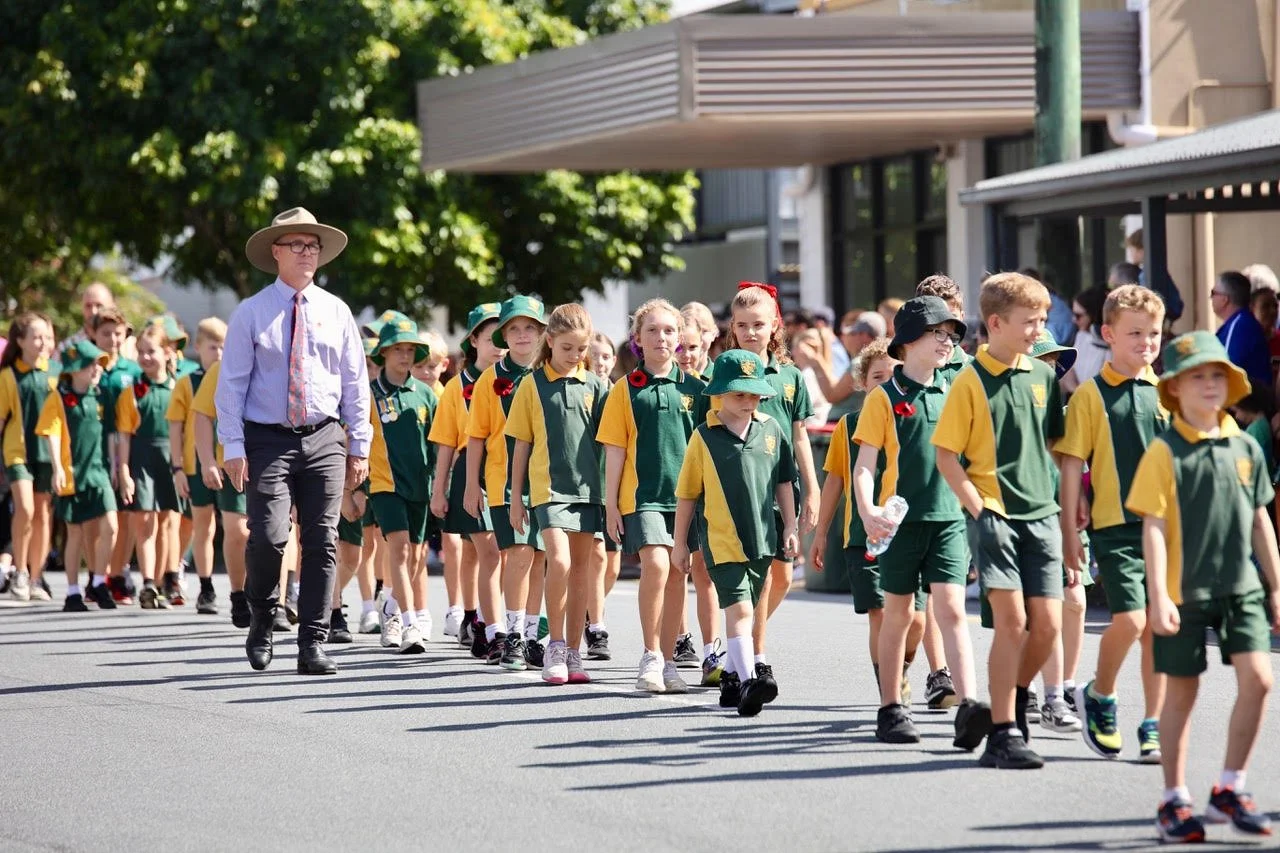
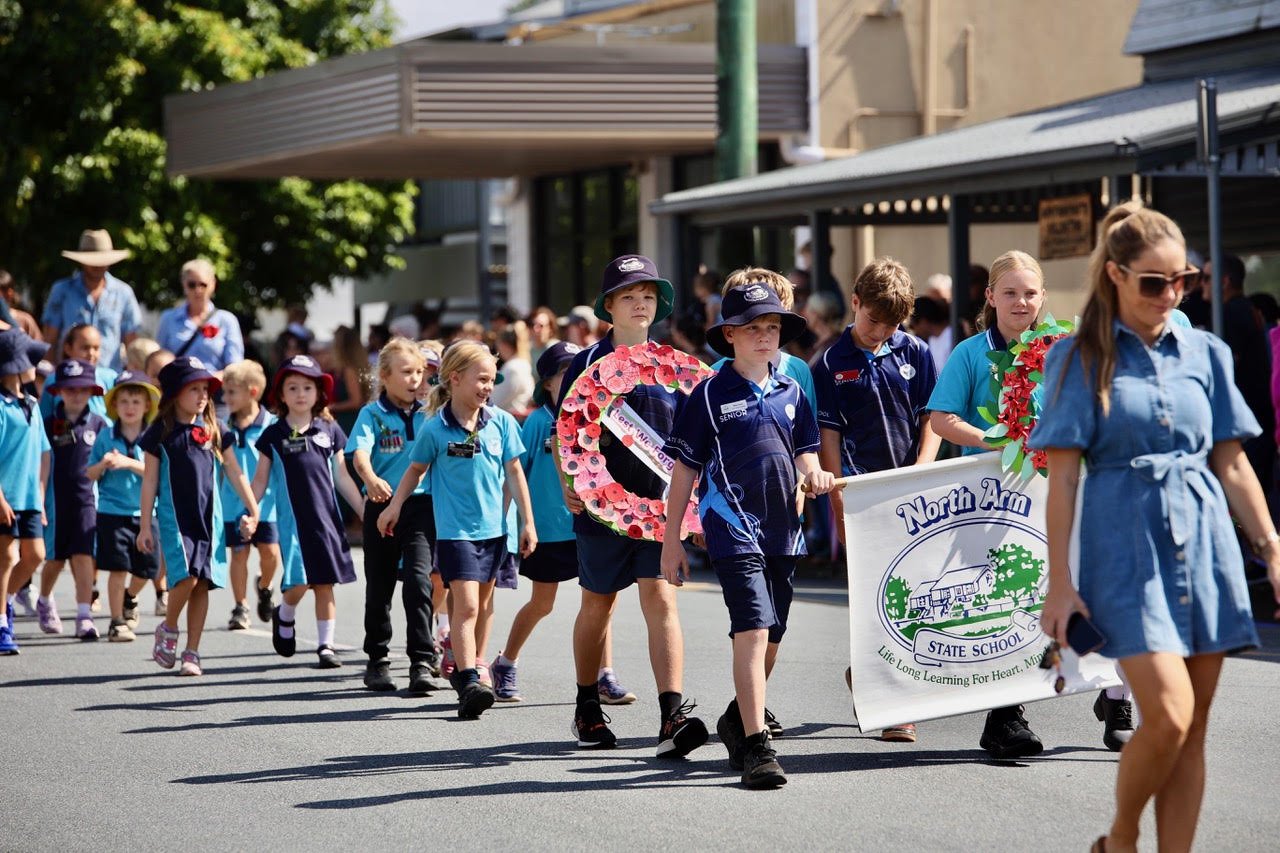
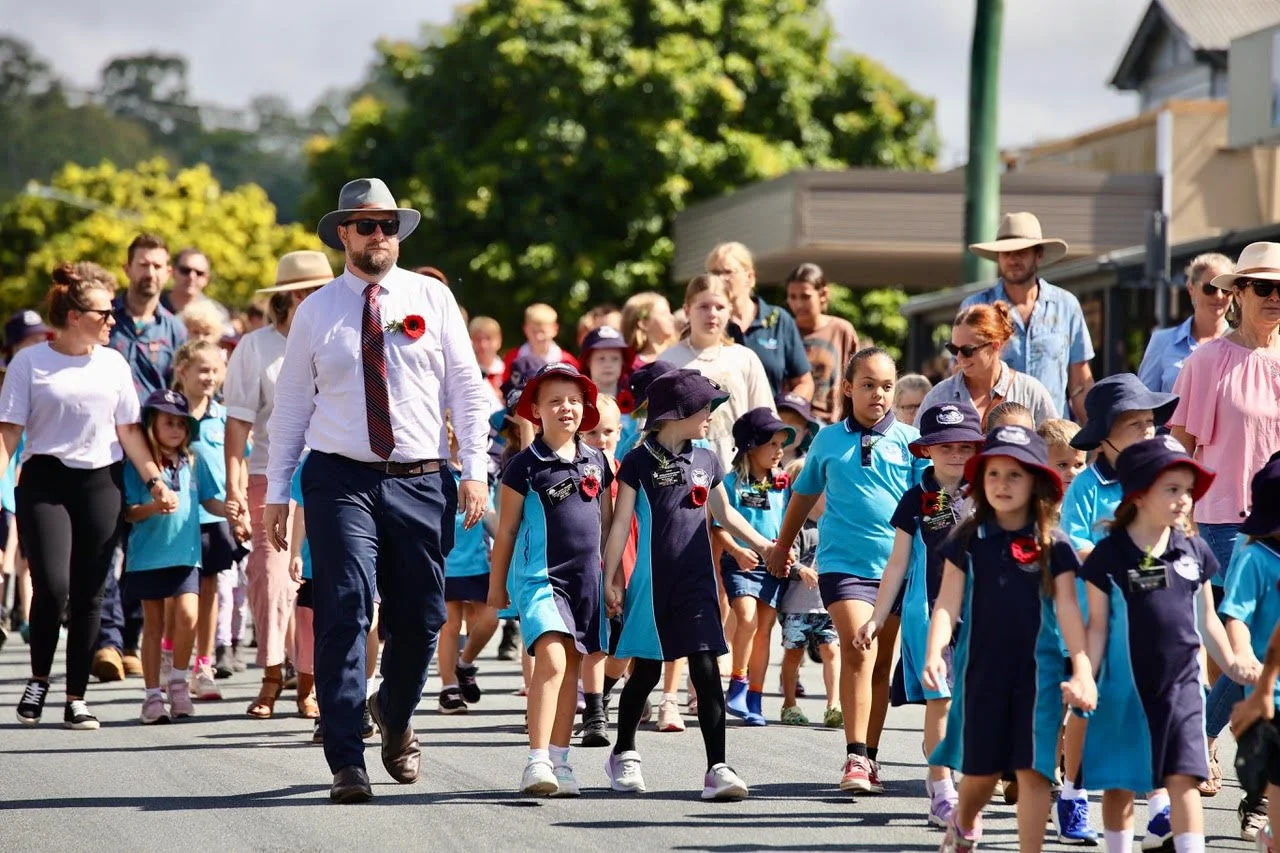
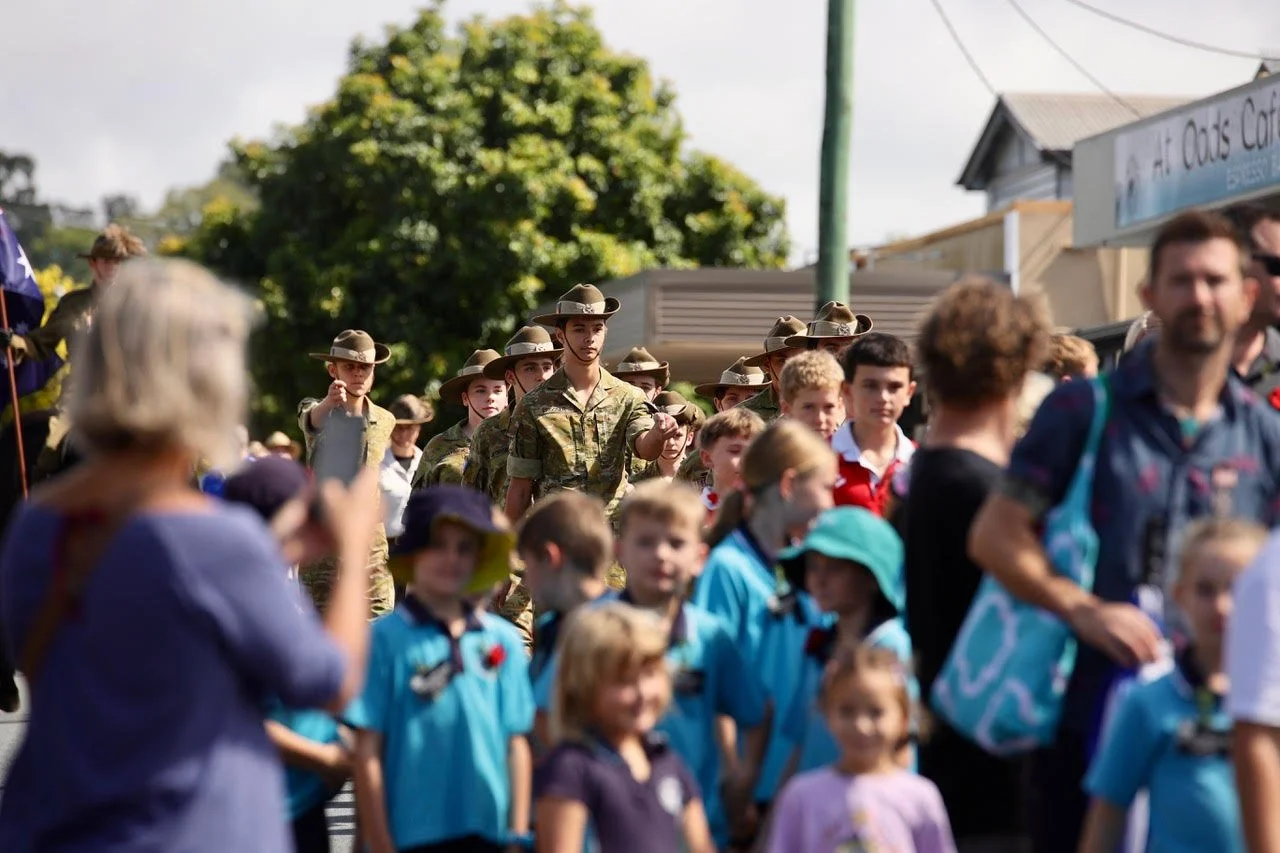
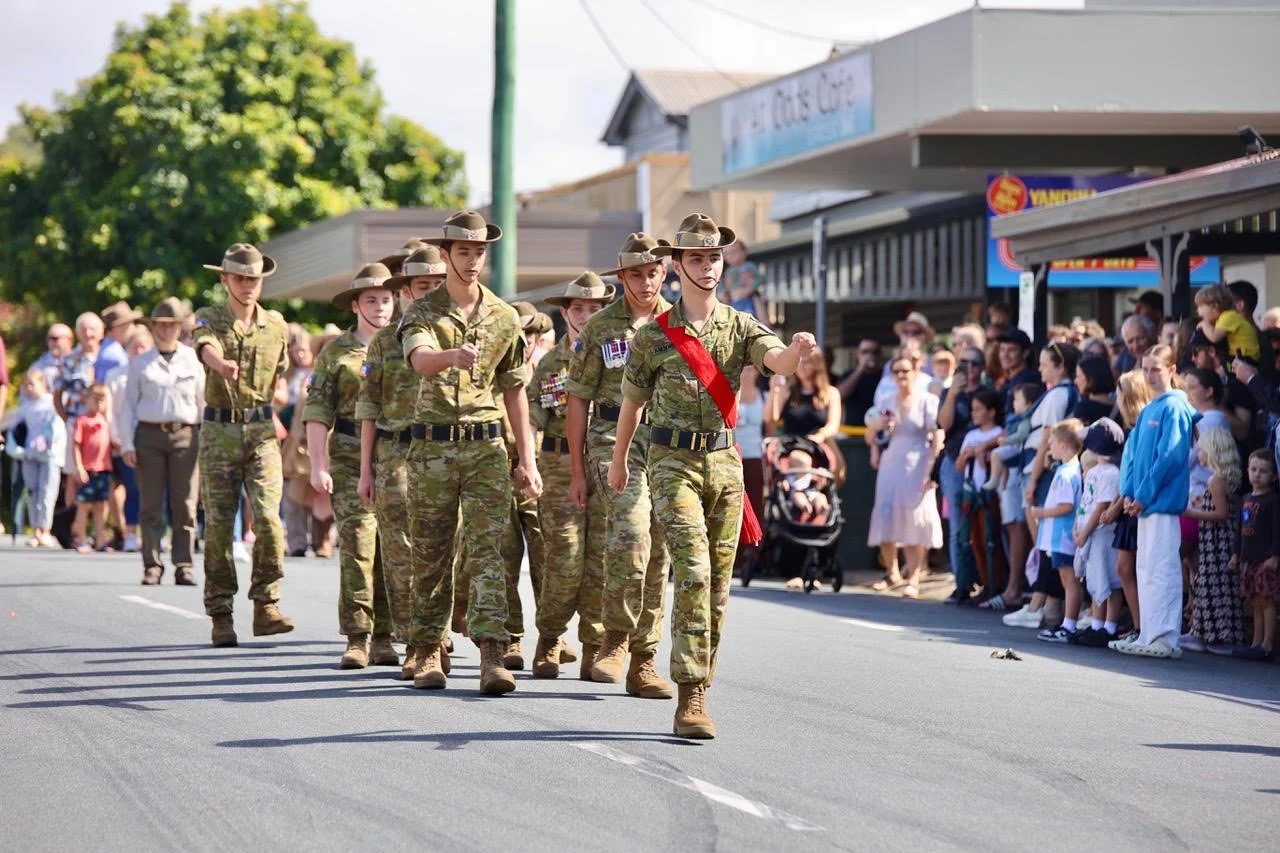
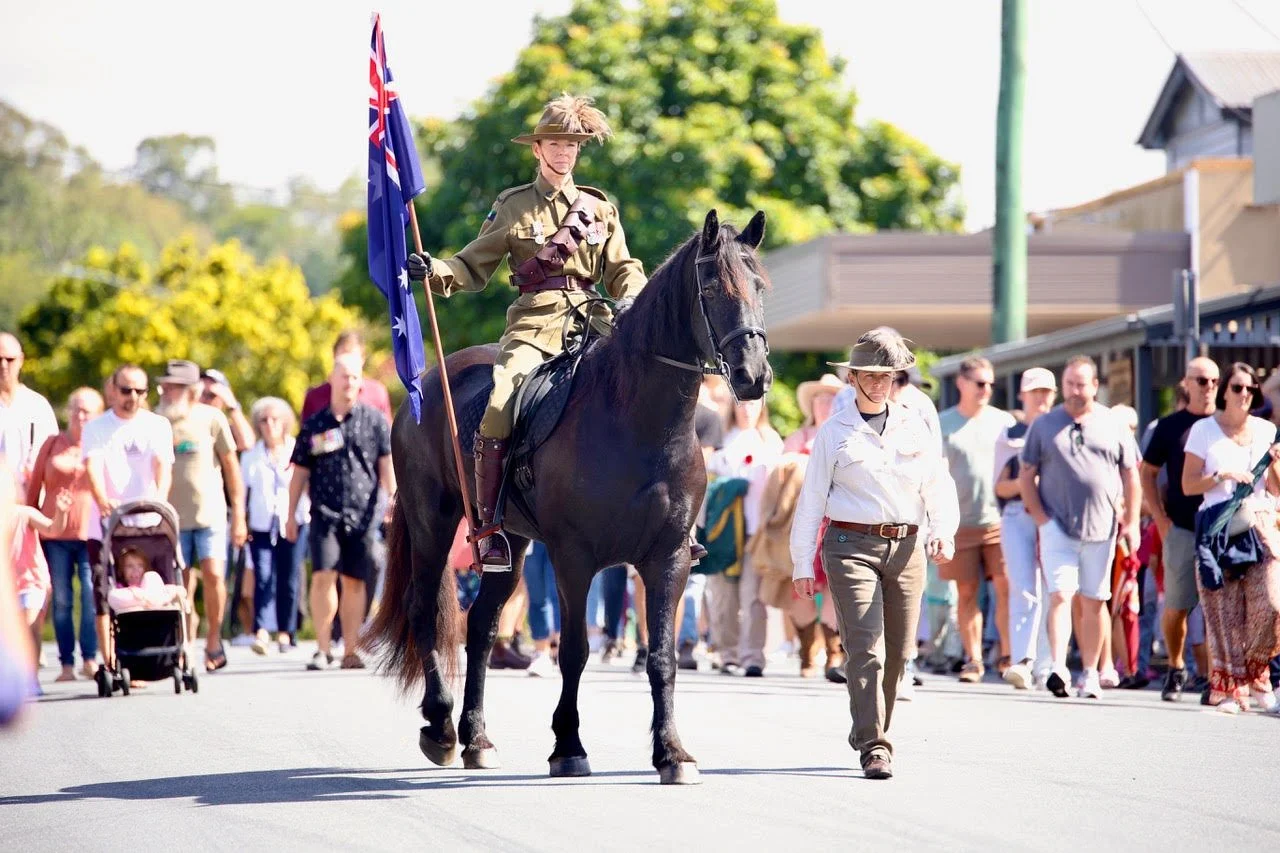
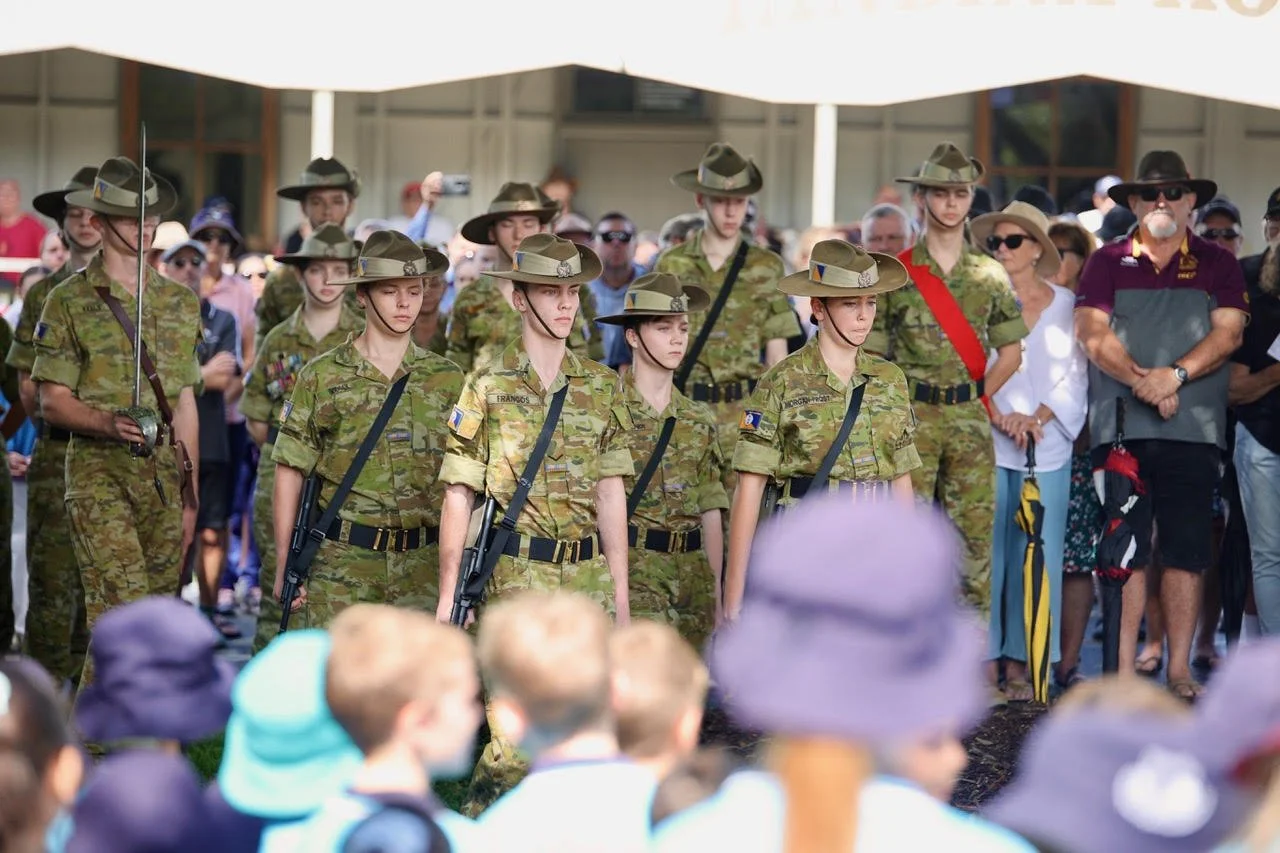
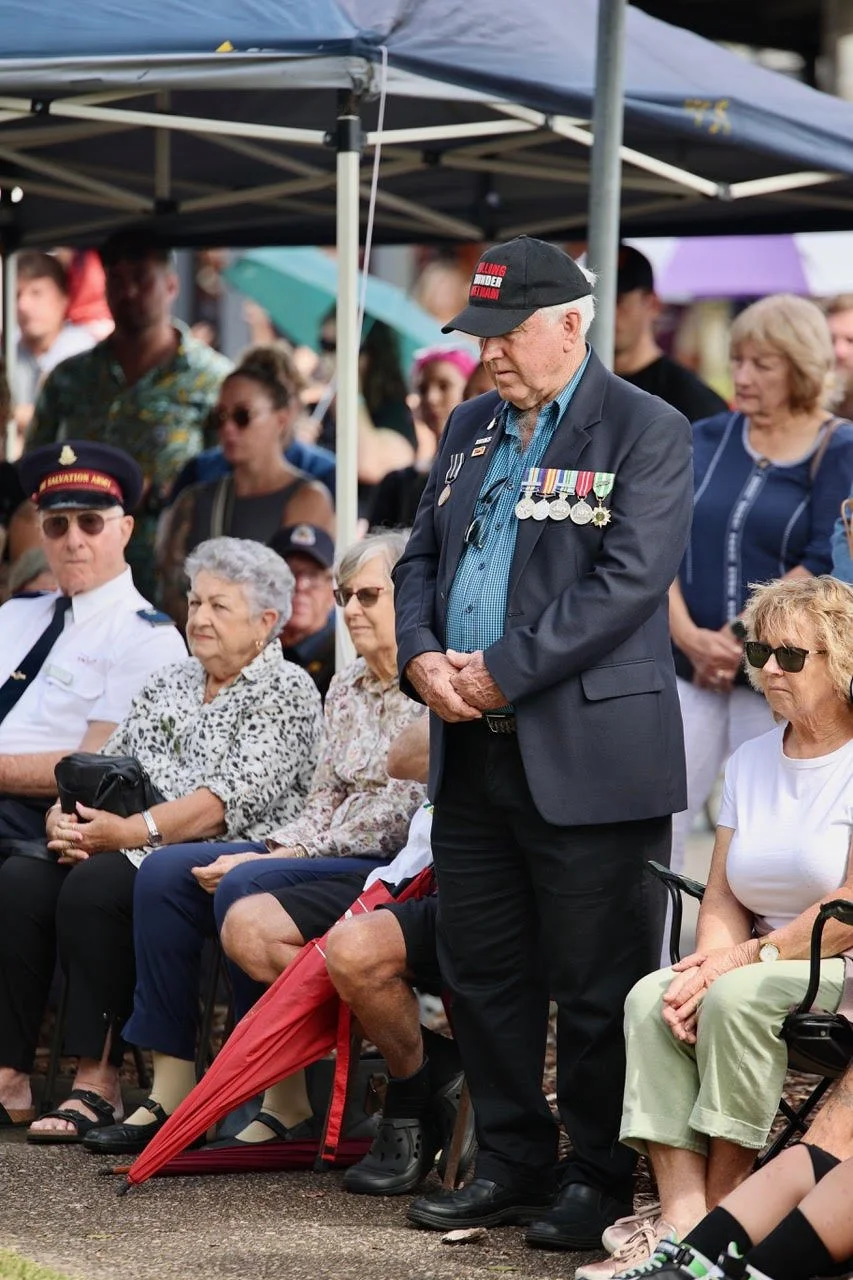
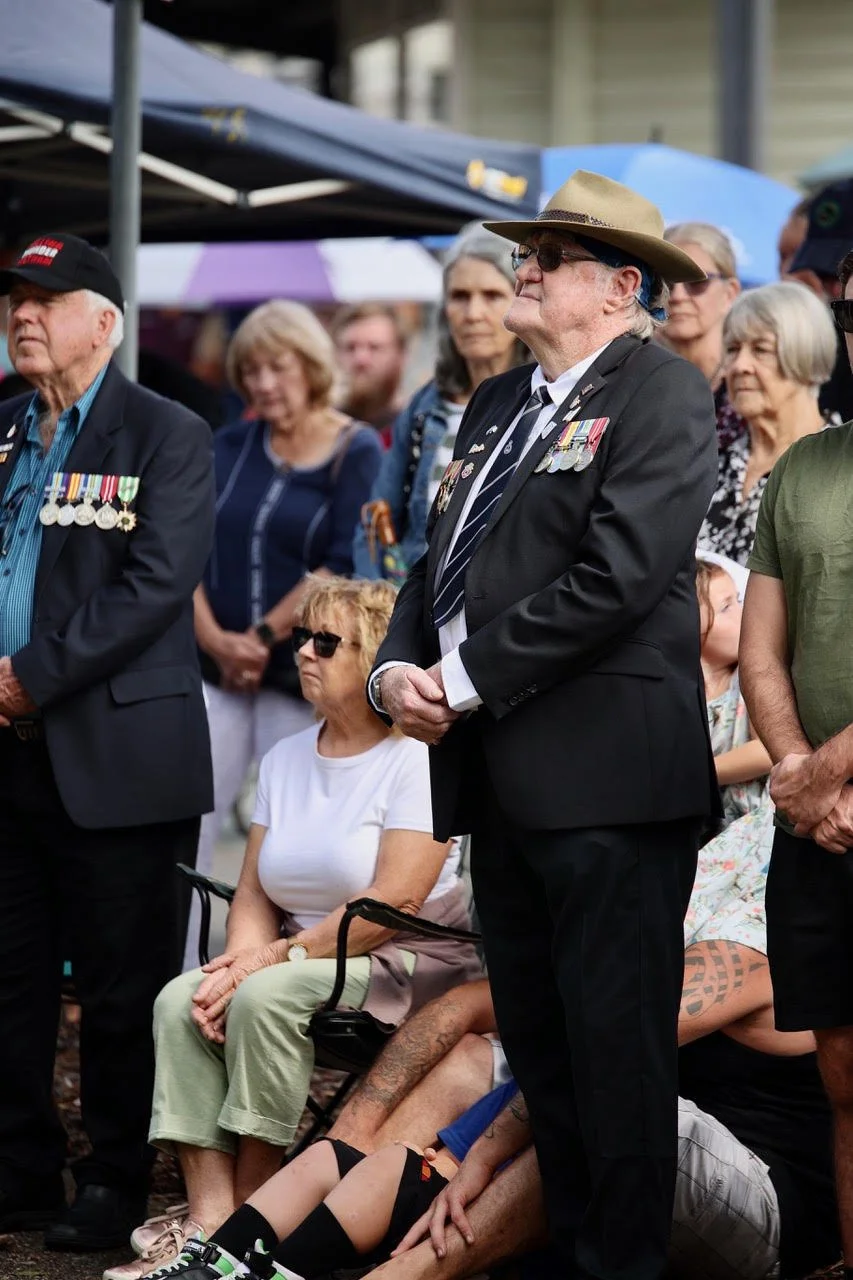
Yandina’s community turned out in force today for the ANZAC Day commemorative service at the town cenotaph, organised by local volunteers and Yandina–Eumundi RSL members. After marching from Stevens Street, led by the RSL and supported by North Arm Rural Fire Service and Yandina and North Arm State Schools, attendees gathered at 11 am for the ceremony.
Musical accompaniment was provided by Chris Mills, who led the national anthems, Craig Ellis of the Sunshine Coast Caledonian Pipes and Drums, whose lament added poignant resonance, and Victor Flatt on bugle for the Last Post and Reveille. Guest speaker Samarica Payne delivered the ANZAC Day address, followed by youth tributes from school captains of Yandina and North Arm State Schools, and a moving recital of “Not a Hero” and “The Young Anzacs.”
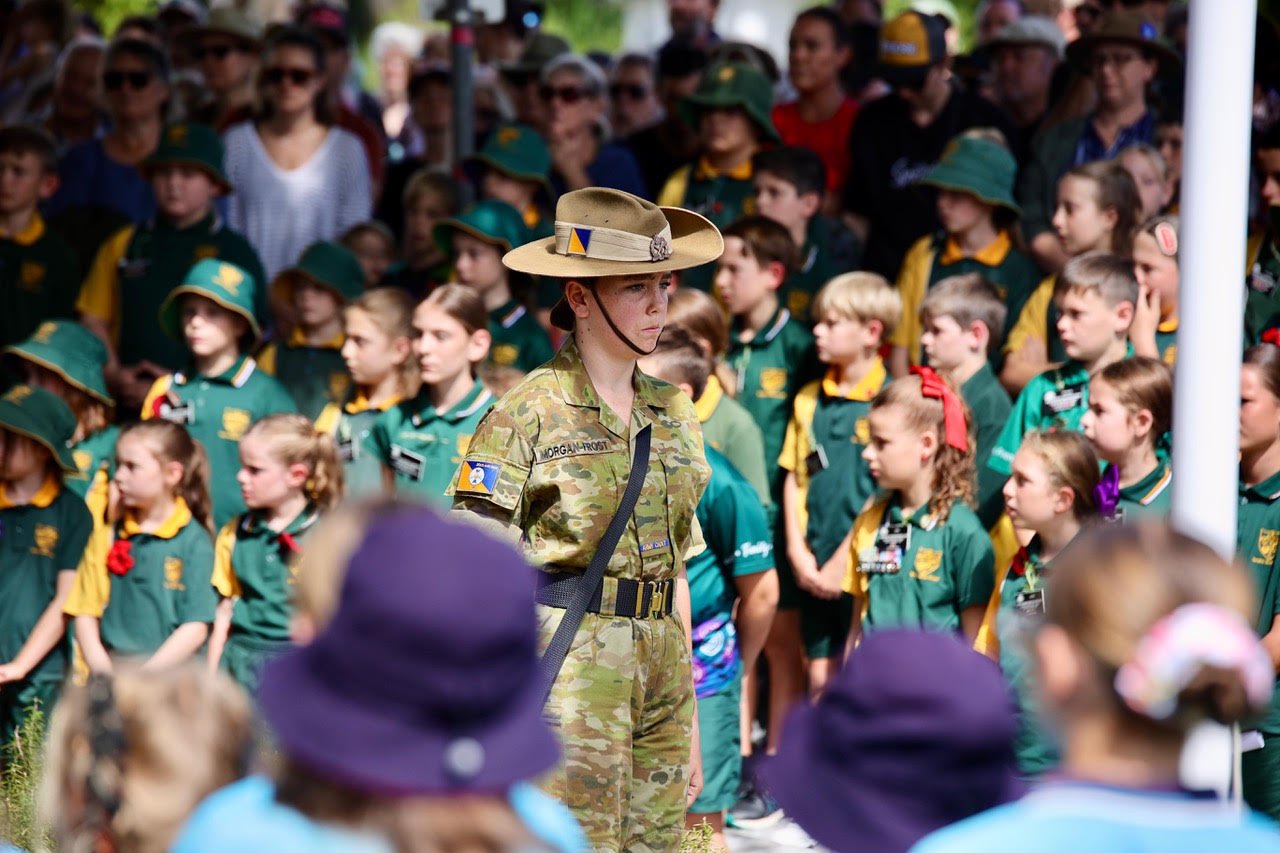
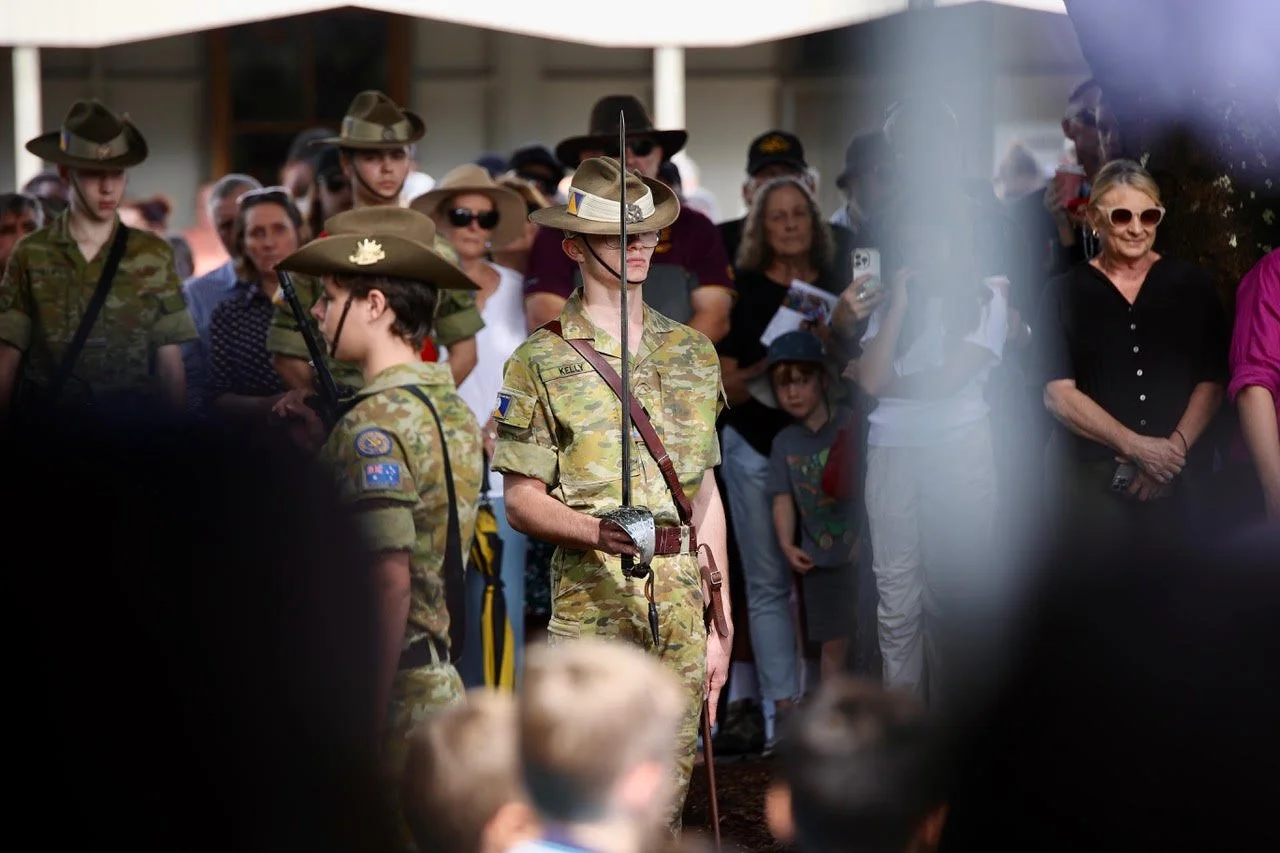
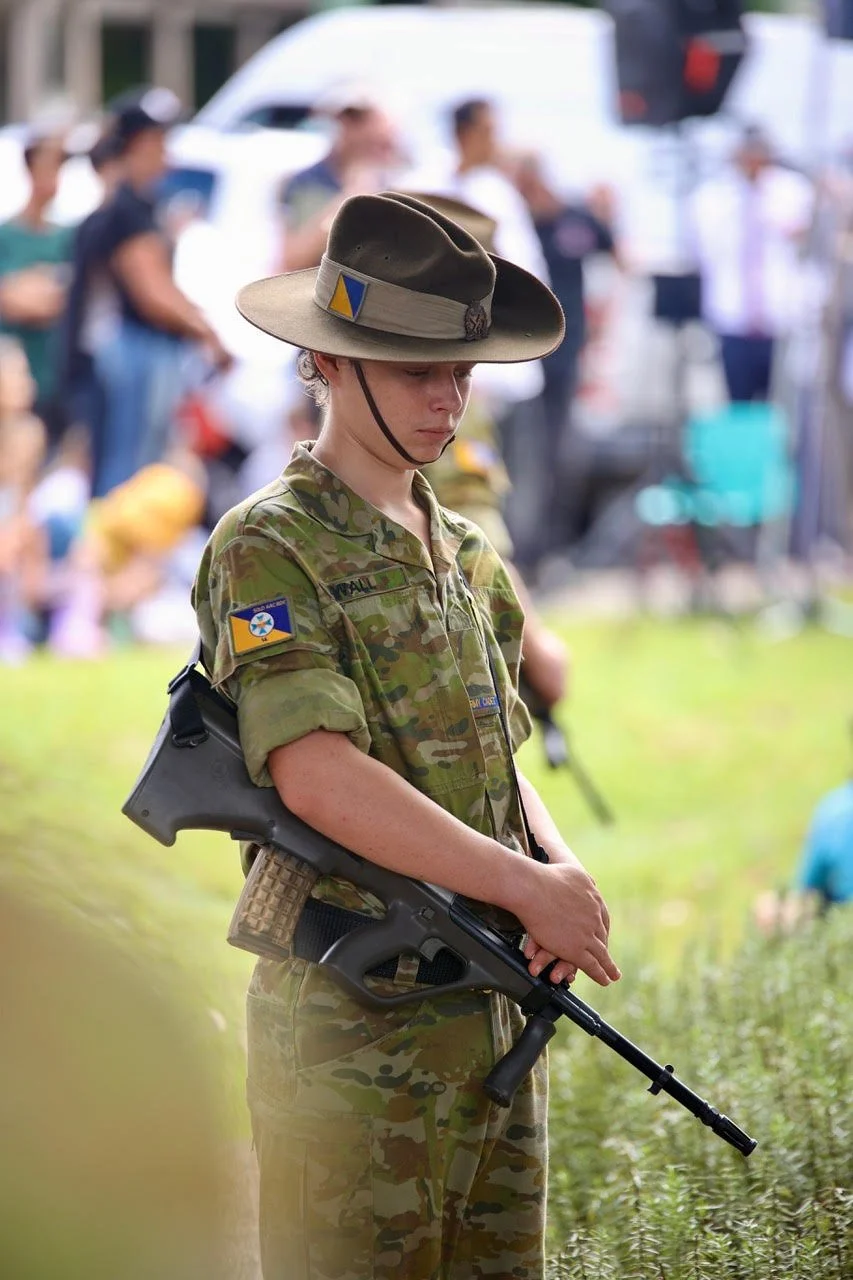
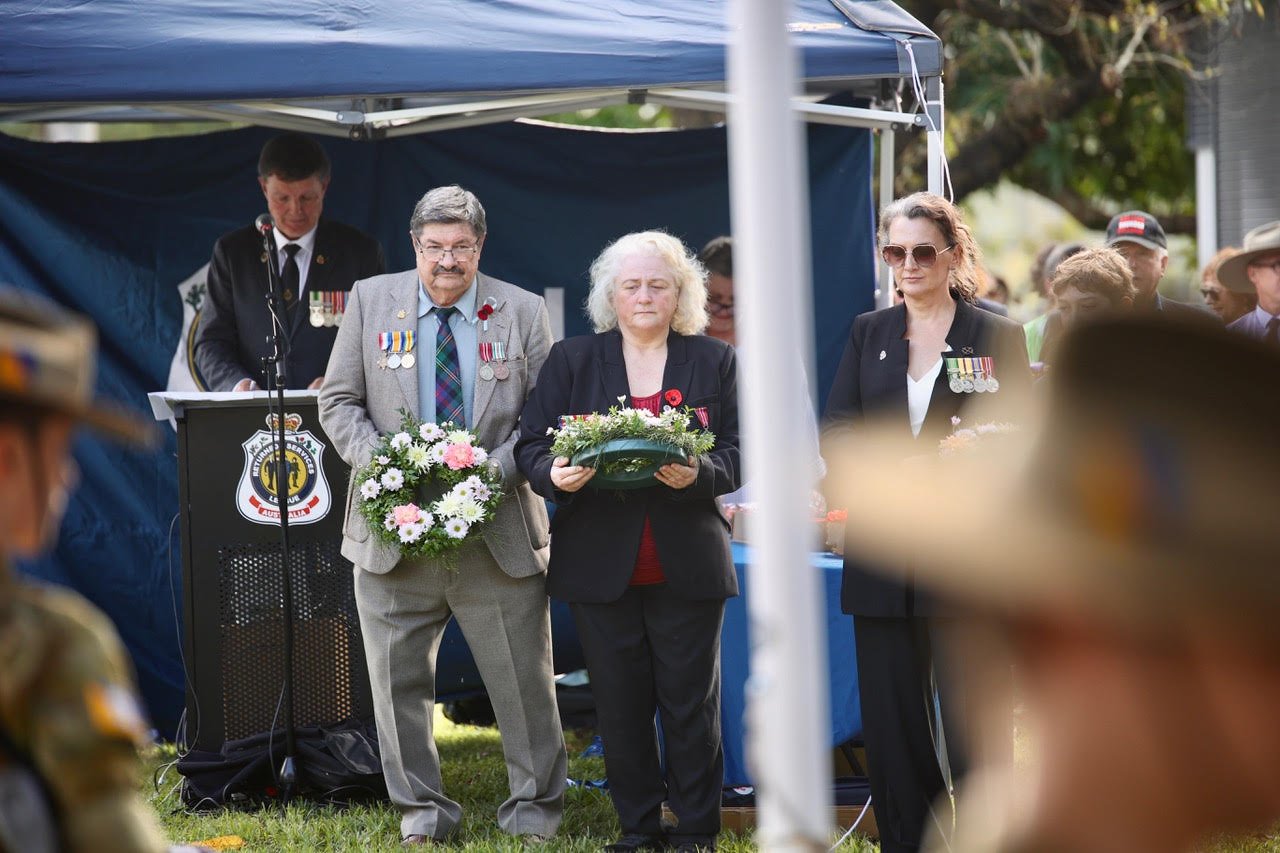
Cadets from 128 ACU formed the catafalque party, and community children laid rosemary sprigs before the Ode, one minute’s silence, and the Rouse. The service closed with wreath-laying and the flags returned to full mast.
Former Army Captain Sam Payne delivered a poignant message at the Yandina Anzac Day commemorations, highlighting the enduring power of the Anzac spirit and its continued relevance to Australian identity.
Speaking to a “fantastic turnout” of veterans, community members and students, Ms Payne recounted how the tragedy of World War I “birthed the Australian spirit” that continues to define the nation today.
“From a population of under 5 million, 417,000 volunteered and of these 332,000 served. Australia’s casualty rate was 65%,” Ms Payne noted, emphasising that “the impact on Australian society would take decades to recover.”
She shared the heartbreaking story of Private James Martin, who died at Gallipoli at just “14 years and nine months of age”, becoming the youngest Australian to die at war after lying about his age to enlist.
Reflecting on Australia’s choice to commemorate Gallipoli, rather than military victories, Ms Payne offered a profound insight: “Why was our greatest military defeat the one that we used to mark our national military commemoration? Because it hurt. It scarred us. And from this, it then defined us and shaped us.”
Ms Payne’s own military journey began as a 19-year-old reservist, but everything changed after September 11, 2001. Despite being told she “would never deploy” as a female Arabic-speaking reservist, she served seven months in Iraq with the Overwatch Battle Group.
“I witnessed things that you would not wish on anyone,” she revealed. “Yes, of course serving was a job and we got paid very well, but it came with an additional sacrifice and long-lasting consequences as I’m sure every veteran standing amongst us understands.”
For Ms Payne, Anzac Day represents society’s commitment not to forget veterans’ sacrifices. “Anzac Day, the dawn service, the march... showed us that you won’t let the memory of the fallen and the returned be destined for a dusty archive box.”
Anzac spirit still defines us
She emphasised how the Anzac traditions of “courage, mateship, sacrifice, resilience, perseverance... continue to resonate with our Australian spirit of selflessness and community”, visible during national emergencies when Australians “don’t think twice about helping our neighbour.”
“Now I, like every person, hope Australia will never be involved in another war. But whatever you do in your lives, whether you were born here or whether you have made Australia your home, please try and remember that it is this tradition that this spectacular country is built on. If you do this, you’ll be keeping the tradition with those who put the word Anzac into our language and you’ll be helping to make sure that the Anzac spirit is always part of Australian life.”