
Yandina Public Forum on Fire Ants following nest discoveries
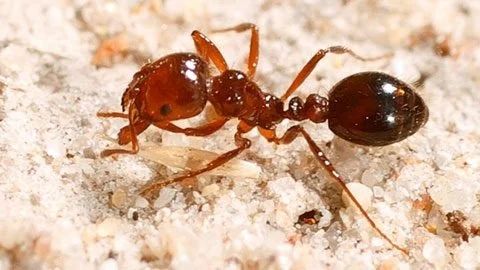
Image courtesy of https://www.moretonbay.qld.gov.au/
By YADCA President Marie Reeve
Forty seven locals took the opportunity to attend a public forum on Fire Ants supported by MP Marty Hunt and hosted by the Yandina and District Community Association (YADCA). The forum was the first of the tri-monthly public forum program to be offered by YADCA in 2026.
Fire ants are a major risk to the environment, economy and lifestyle in Southeast Queensland and beyond. The spread impacts not just those with an infestation. Everyone within a biosecurity area is affected and those beyond should also be aware and ensure that there is no human assisted spread of these invasive pests.
Fire ants have been a hot topic in our area since 4 fire ant nests were discovered at North Arm in January 2025. A 5 km biosecurity zone was declared around the site and eradication measures are taking place.
The forum, held on Monday, 9 February 2026, was addressed by two representatives from the National Fire Ant Eradication Program ( NFAEP) who provided information on fire ant identification, behaviour, risk and eradication methods followed by Q&A. Residents also had the opportunity to mingle and discuss individual issues over supper.
What we learnt: Fire ants are highly invasive and can establish colonies underground or in hard-to-reach locations, making them difficult to detect. Mature colonies produce winged reproductive alates that can fly up to 5 km to establish new nests. They spread naturally by flying and rafting on slow moving flood waters. But more significantly, they are spread quickly and further by human assisted movement via the transfer of mulch, hay, turf, soil, manure or potted plants.
Fire ants are dangerous to humans, pets, livestock and wildlife. They are highly aggressive, swarming in large groups to attack anything that disturbs their nest, and they use a venomous sting to kill their prey. They can render backyards, parks, playgrounds unusable and can close sports fields.
To stop fire ant colonies spreading throughout neighbourhoods and across rural lands, eradication procedures include treatments of properties within a 5 km radius of an infestation to ensure no nests remain hidden underground.
There were questions about the effect of fire ant baits on humans and wildlife. The National Fire Ant Eradication Program have restrictions on where and when the treatment can take place and the method of application. The treatment is specifically designed to kill ants. The amount of active ingredient (5 grams per kilogram) is enough to affect fire ants but is too small to affect plants, animals, or people.
The baits contain a very tiny amount of an insect growth regulator (S-methoprene or Pyriproxyfen) in processed corn grits coated with soybean oil. Worker ants take the bait back to the colony, where it is shared with the queen, which then either dies or becomes infertile. Any uncollected granules will break down within days. The baits are not sweet so are not attractive to nectar seeking species.
Fire ants pose a greater risk to animals than the treatment does.
For more information on treatments for fire ants refer to: https://www.fireants.org.au/treat/treatment-types
YADCA would like to thank Jen and Nicole from the NFAEP for their time to help our community better understand the threat of fire ants and the difficulties of eradication. The community needs to be vigilant to stop the spread of this invasive, destructive insect.
YADCA seeks public interest topics for future Public Forums. If you have a topic for the Public Forum Program please contact us via secretary@yadca.org , www.yadca.org, facebook link.