Why pumpkin is a backyard grower’s best friend
Hinterland Homesteading with Racheal Pascoe from Rosemount
I hope you have made a little start in your veggie garden for the year. I have cleared out several raised beds and planted some leafy veggies … cauli, spinach, broccoli and some beans. I have been trying to net them, so I don’t have to share too much with those pesky caterpillars. I love to be growing what is in season and storing any excess for later on. It has got me thinking about what staple foods we could grow easily at home. As the price of food seems to keep getting higher, let’s see what we can do for ourselves.
Kent Pumpkins
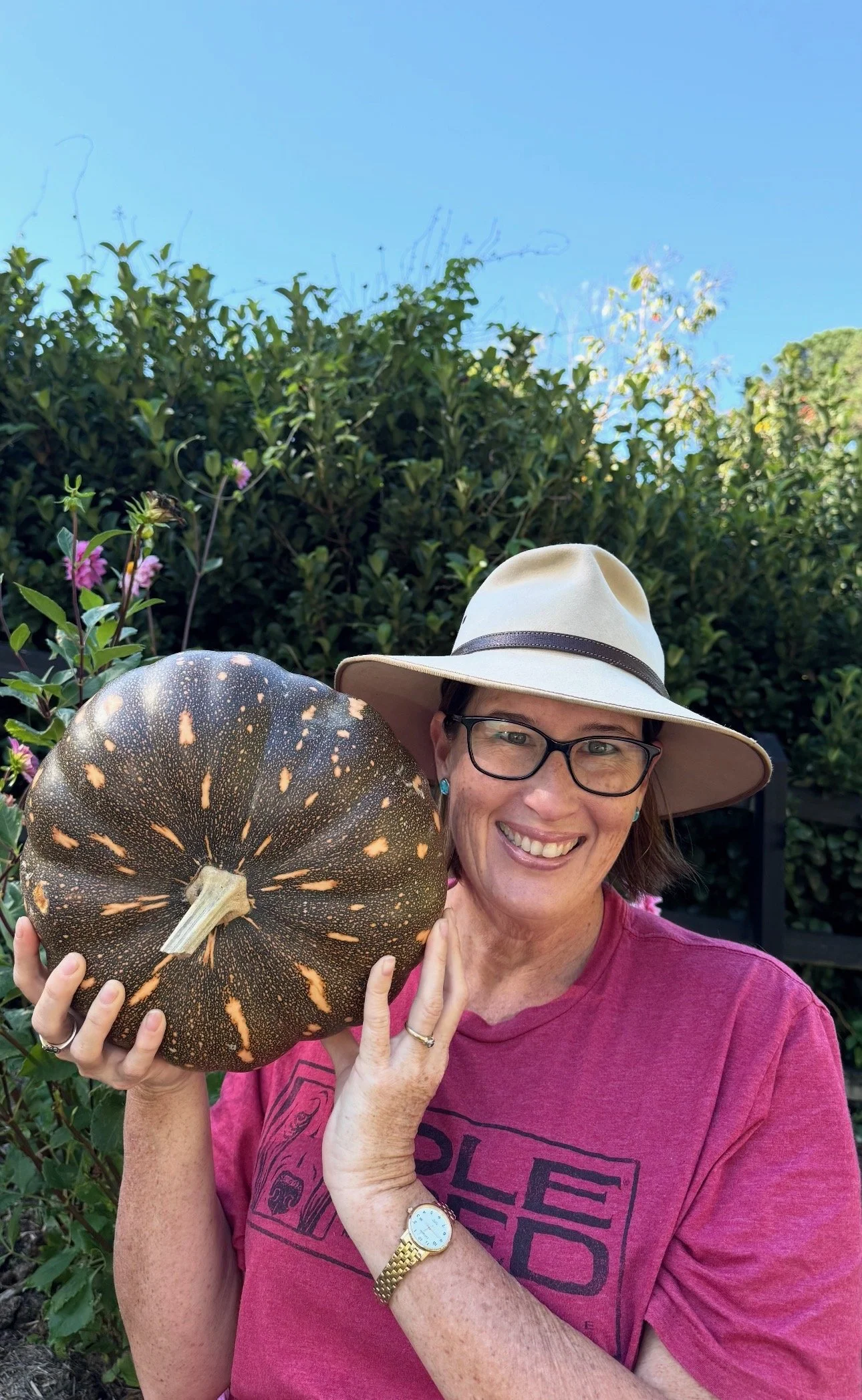
These are the speckly round pumpkins you see at the shops. They are currently $2.98 per kg. They are super easy to grow, I am sure you could do it at your place. They do need sunshine and a bit of space to ramble around. If you have got a messy looking corner of the garden that you wouldn’t mind sharing with a pumpkin vine, it could be the ideal spot to grow a crop of kent pumpkins. Kent pumpkins are also called Jap pumpkins.
How to start
This winter, buy a pumpkin or a piece of pumpkin from your fruit shop and save the seeds. Yes, it’s that easy. Lay them on some paper towel for a couple of weeks to dry out. Then you can plant them in little pots in spring to get them going, but honestly pumpkin seeds are pretty keen to get going themselves once planted. You can even just plant them out in the garden and keep them damp while they establish themselves. The vine will ramble in each direction, you can kind of tame it a bit, by turning the long tendrils back in the other direction. Pumpkins will grow all year round here in South East Qld. In saying that, they do die off a bit in the cooler months. Our Springtime is the best time to get seeds started.
The Birds and the bees
Well actually it is really just the bees we need to pollinate the flowers. Pumpkin vines have both male and female flowers. If you find golf ball-sized pumpkins are going brown and dropping off, you will need to hand pollinate from then on. Maybe the bees in your area are having time off! Simply take a male flower (the one with the single stalk in the middle of the flower) and remove all of the petals. Take it to a female flower (the one with the lumpy centre in the flower) and gently touch the male flower centre to the female centre. Your work is now done! You will have hand pollinated a pumpkin flower. Use that male flower to pollinate all the female flowers you have.
When to pick
Pumpkins can be all sizes, so don’t fall for it, thinking that a big pumpkin is necessarily ready to pick. The longer a pumpkin is left on the vine, the sweeter and more flavoursome it will be. A kent pumpkin is definitely ready to pick when the vine dies back and when the pumpkins’ speckles have turned from creamy white in colour to a coral orangey colour. You can also follow the stalk of the pumpkin to where it joins the main vine. Near the junction, there will be a little piggy tail. It is a curly thin stem. When this is dry and brown, the pumpkin is ready to harvest. Let a newly harvested pumpkin sit for a week or two before using it.
How to use a pumpkin
Well, how creative can you be? Pumpkins have a delicious sweet flavour and can be used for all sorts. I like to roast pieces, skin off, on trays to make soup. If we roast pieces to eat whole, we love to skin left on. Chewy pumpkin skin is really yummy.
You can use pumpkin to add to a casserole, as a filler. Steam it and mash it for a side dish. Add some cauliflower to the mash and it really makes a lovely flavour. Pumpkin scones are always a winner.
Whole pumpkins will store for months in a cool, dry place. You can cook it and freeze it for use later on. It really is that versatile!
As you are enjoying delicious pumpkin this winter, save some seeds so you can grow your own in the springtime.
Happy homesteading everyone!