
Moreton mates’ sweet memories of the mill that made them
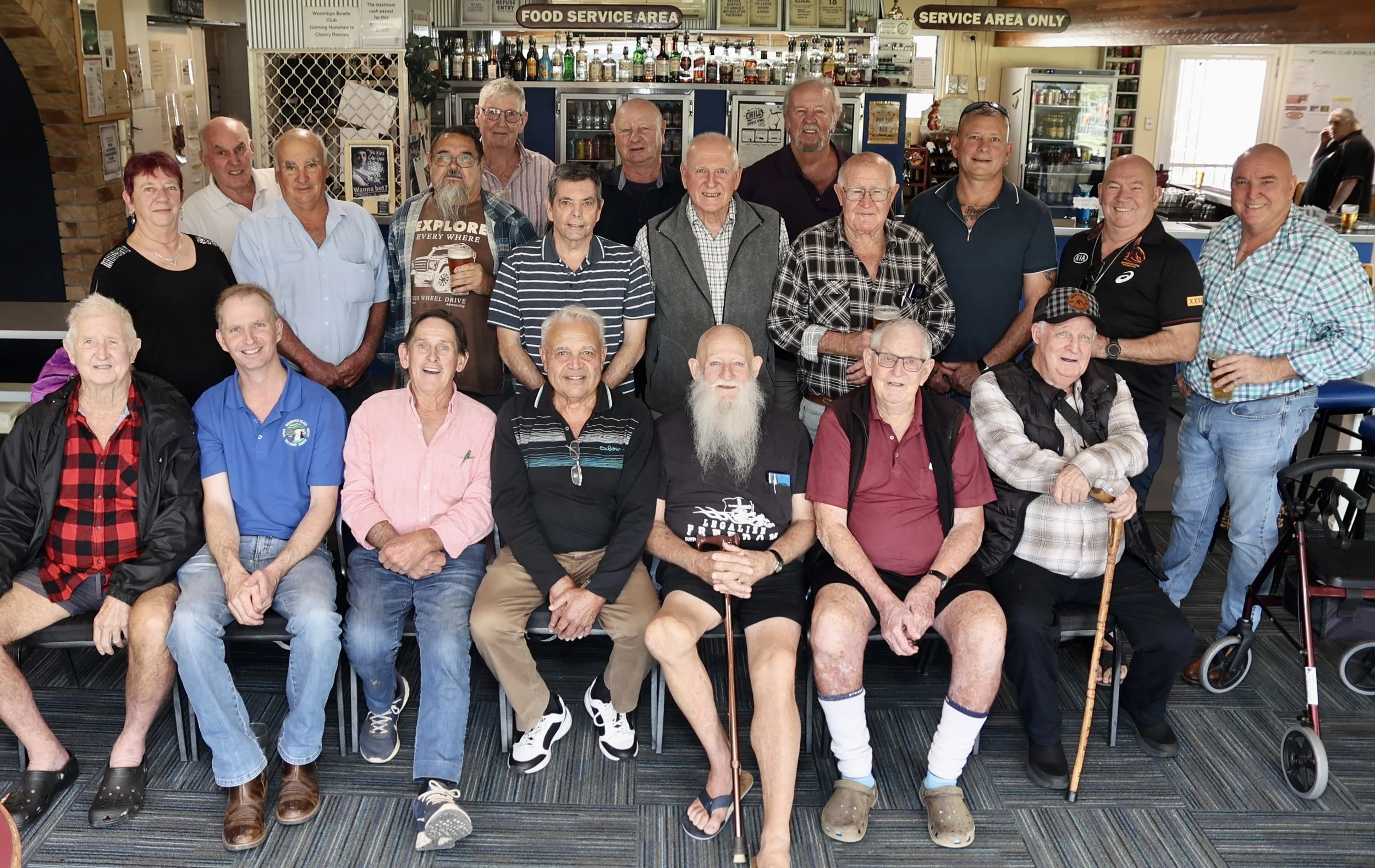
Former Moreton Mill workers, cane farmers and families gathered at Woombye Bowls Club on May 29 to share memories of the Nambour mill and the friendships forged through decades of sugar crushing seasons.
by Cameron Outridge
The last crush at Nambour’s Moreton Mill was more than two decades ago, yet for the former workers who gathered at Woombye Bowls Club last Friday, the memories of mateship remain as fond and strong as ever.
Former mill workers, cane farmers and their partners reunited on May 29, marking 25 years since their first gathering and sharing stories of the jobs, friendships and practical jokes that bound them together through decades of sugar crushing seasons.
The Moreton Central Sugar Mill crushed its first cane in 1897 and, for more than a century, stood at the heart of Nambour’s economy and identity before closing in December 2003. Its former site is now occupied by the Nambour Mill Village Coles supermarket complex.
Reunion organiser and retired engineer Don Fewquandie said he wanted former workers to help map the old mill site over the present-day Coles development, so future generations could understand what once stood there.
“Every time I go to the Coles complex there when I’m in Nambour, I go, ‘Well, where was this? Where was that? Where was this?’” Mr Fewquandie said. “I think it’s important for history and the only blokes that know where all the stuff is and the only people who could put it back together is you guys here.”
Greg Rigby, Craig Morrison, Noel Brown and Jimmy Attewell volunteered to help with the project.
For many in the room, the mill was where adult life began.
Mr Brown started at the mill in 1964 as a 15-year-old apprentice fitter and turner, undertaking the last of the five-year apprenticeships before spending 35 years as a welder. “Not only did the sugar mill produce sugar, but they also produced tradesmen,” Mr Brown said.
He recalled apprentices going on to work in mining and other industries, while some eventually returned to the mill, having found the grass was not always greener elsewhere.
Mr Brown said it was not only the work, but the camaraderie and mateship that made Moreton special.
“I can honestly say for the whole 40 years there until the lights went out, I enjoyed every single day,” he said.
Jim Attewell told how he arrived at the mill in 1968 after deciding carpentry was not for him, landing a job firing on the locomotives before eventually becoming a permanent driver. He remained until the mill closed, then spent another two years helping pull up the rail lines.
Alan Bott remembered starting as a navvy in 1979 and being invited for a farewell beer when the Plater boys retired. When he told Edgar Plater he did not drink beer, he arrived at the pub to find five litres of orange juice waiting for him.
Cane farmer Gordon Benfer recalled hauling the final load of cane into the mill on its last night, in the rain, from the mill farm at Sippy Downs.
Ross Cornford, who worked at three sugar mills during almost 50 years in the industry, said Moreton stood apart.
“The people in there at Moreton were brilliant. The other places I worked at were ordinary,” he said.
Mr Fewquandie agreed, saying the men he worked alongside remained among his fondest memories of his working life.
That was the story repeated around the room. The mill may be gone, but the friendships forged there have survived long after the last crush.
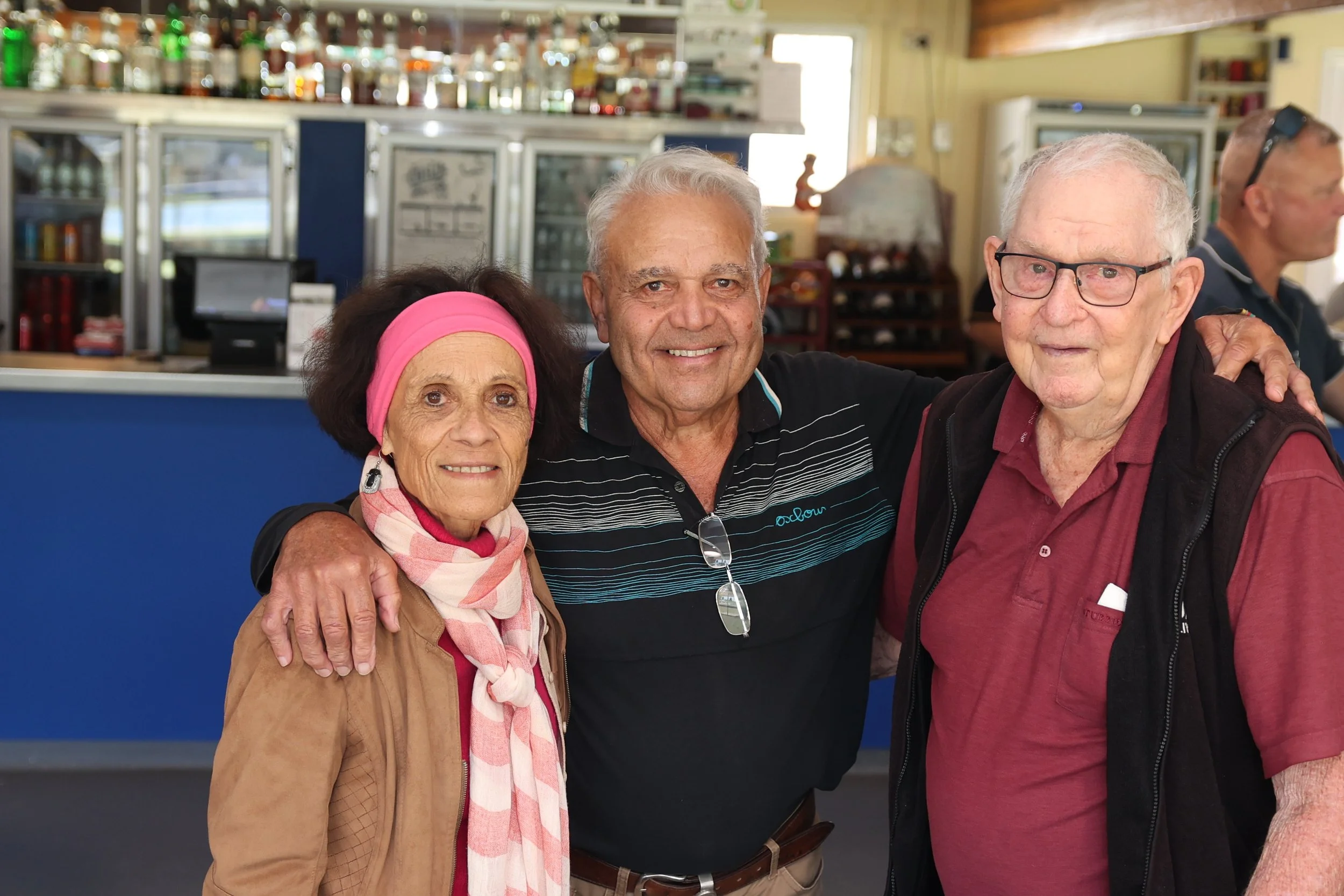
Sue and Don Fewquandie and Bob Turner who were all at a reunion in 2001.