
Council’s 10-year, $1B budget shortfall
by Cameron Outridge
Sunshine Coast Council must slash expenditure by at least $100 million a year for the next decade as the full financial impact of its depreciation crisis emerges.
Speaking at a Palmwoods community meeting on Wednesday night, Division 5 Councillor Winston Johnston described the council’s current budget process as “incredibly difficult” and warned tough decisions on spending and future projects were unavoidable, especially as costs rose.
“For the next 10 years we have to save or we have to reduce our expenditure by at least $100 million per year,” Cr Johnston said. “That’s a lot of money.”
He said the problem stemmed from depreciation provisions being significantly underestimated over many years by previous administrations. Depreciation is the accounting process councils use to budget for the long-term replacement and maintenance of assets such as roads, buildings, parks and other infrastructure.
In simple terms, the problem was that council had not been setting aside enough money for its growing infrastructure network, even as more assets were added over time.
Cr Johnston said the issue worsened while council’s asset base expanded from about $3.5 billion to almost $9 billion, making the organisation’s financial position appear stronger than it really was.
He said the situation now required council to reassess its spending across the board.
“We can’t go to the public with credibility and say, ‘We’ve got to lift the rates,’ if we don’t tailor the organisation commensurately,” he said.
He said council’s total annual expenditure was about $700 million once grants, fees, charges and other income streams were included.
However, general rate revenue (ratepayer revenue), across the entire local government area, was about $350 million this financial year, with staff costs consuming more than half of that.
“The rate revenue in the current financial year, with general rates for the whole of the local authority, is about $350 million,” he said. “And $180 million of that is paid to staff either through wages or superannuation or other benefits.”
He said council employed about 1860 staff, including about 800 outdoor workers.
Cr Johnston also pointed to rapidly escalating infrastructure costs, particularly road works, saying gravel road sealing costs had almost tripled in six years.
“When I first came on council six years ago, it was $1.1 million to about $1.8 million per kilometre,” he said. “It’s now between $2 million and $3.5 million per kilometre.”
Last year, Sunshine Coast Council revealed depreciation errors worth about $30 million, with the issue contributing to a reported $20 million hole in the 2025-26 budget. But the problem appears to be larger than first alluded to.
Cr Johnston expressed confidence in Mayor Rosanna Natoli and CEO John Baker, both of whom took on their roles after the depreciation issues occurred. He described Mayor Natoli as “intelligent, hard-working, very visible” and said she was “doing a great job”.
Mayor Natoli told the Gazette last fortnight that “without question, sorting out the financial situation” had been the toughest aspect of her term so far. “No one runs for election to do less,” she said. “However, really solid financial stewardship is my duty. It is what the people of the Sunshine Coast expect and absolutely deserve.
“Rising fuel costs and the ever-increasing costs in construction are really putting pressure on all of our projects.
“It is very similar to the pressure everyone is feeling on their household budgets too.”
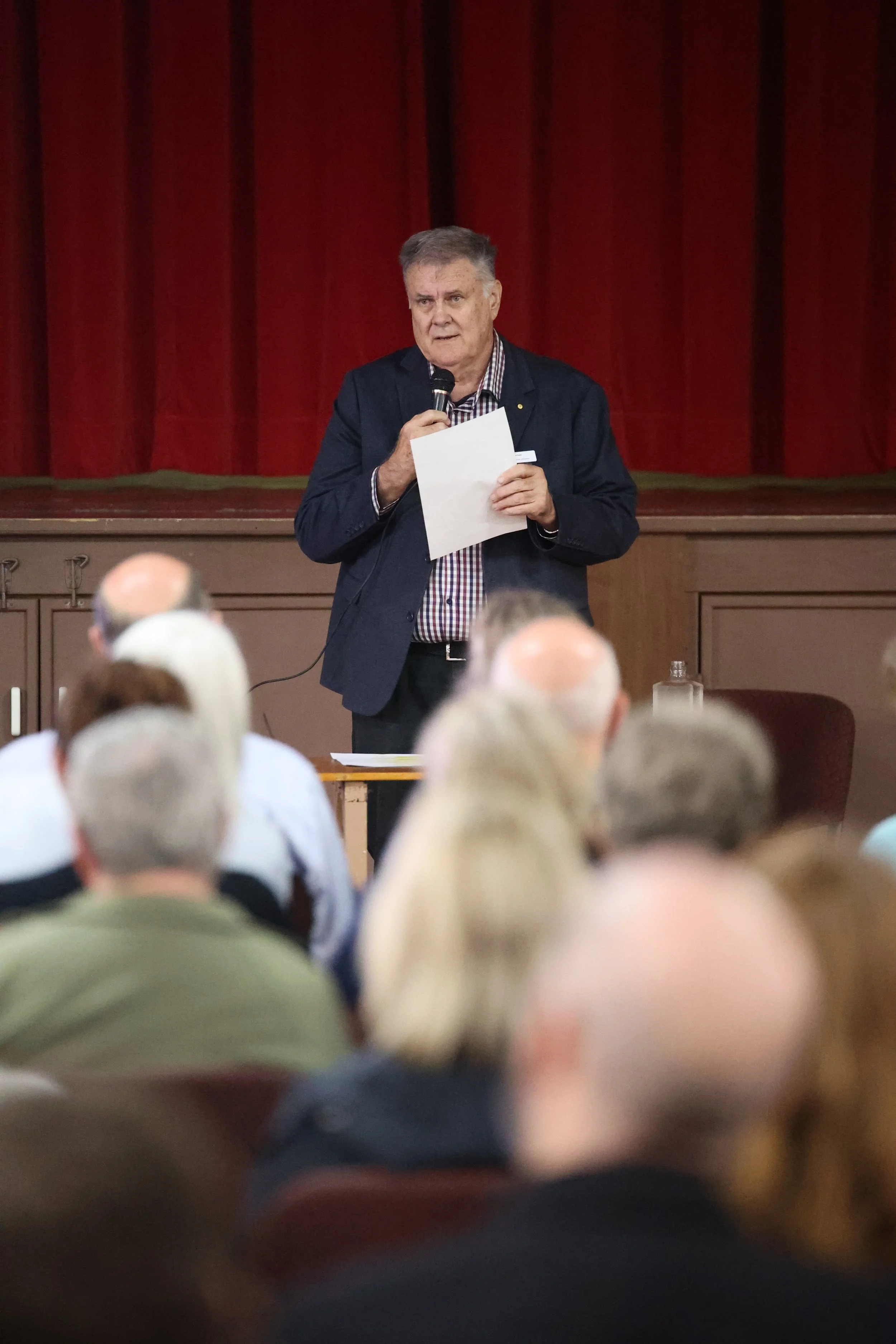
Cr Winston Johnston addresses a packed Palmwoods Memorial Hall on Wednesday night.