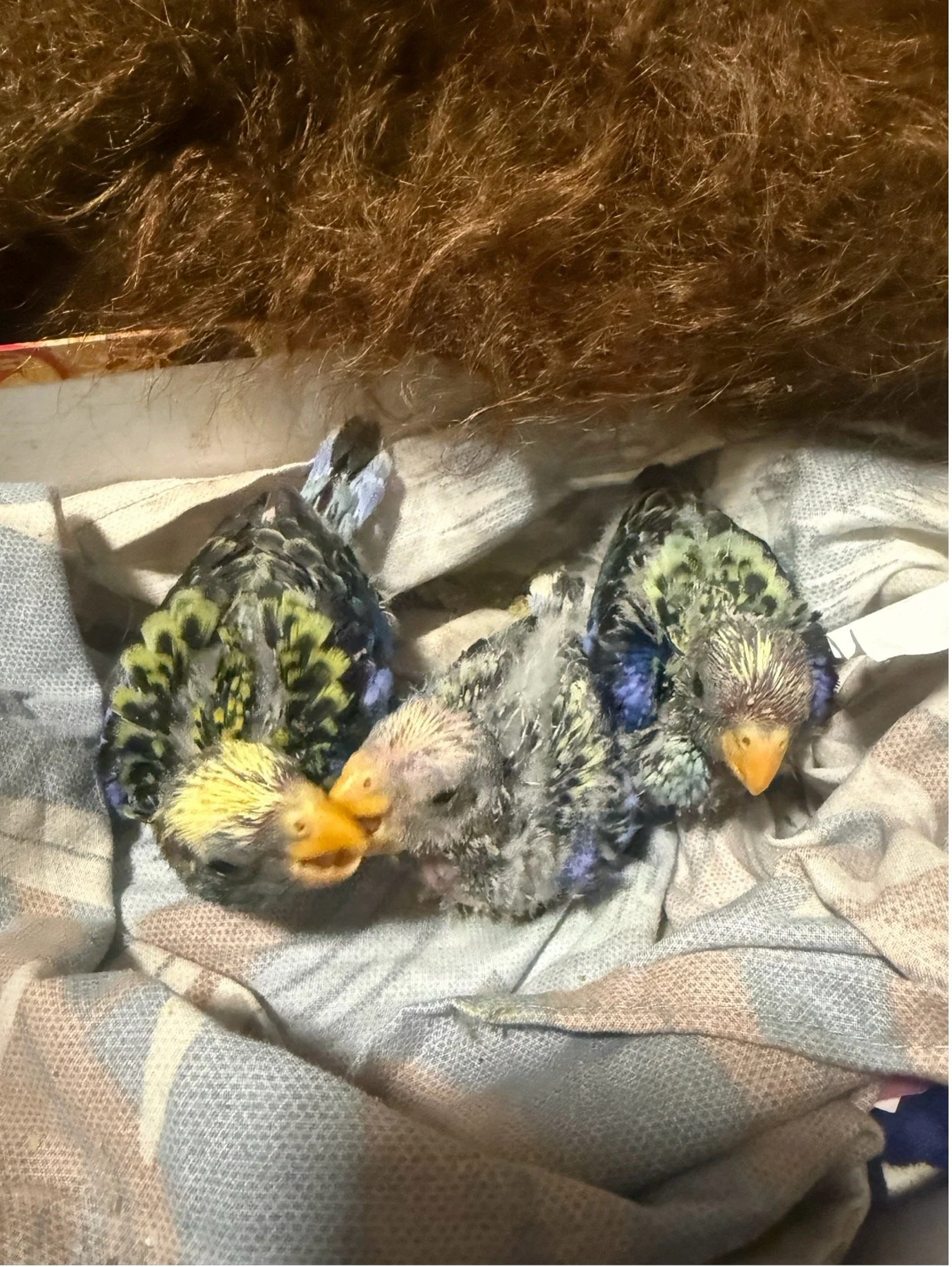
Hop, flutter, fly: Spring has sprung & its baby bird season again
Wildlife news from Jennifer Berry, Wildlife Volunteers Assoc. Inc (WILVOS) 54416200 www.wilvos.org.au
Spring is baby bird season. And that means many young birds will be leaving the nest for the first time. It can be worrying to spot a small bird on the ground, but not every baby bird needs rescuing. When in doubt you can call the WILVOS 24hr Hotline on 07 54416200for advice.
Many are fledglings: fully feathered youngsters that are learning to hop, flutter and fly while their parents continue to feed and watch over them nearby.
If you find a young bird, take a moment to observe from a safe distance. If it is bright, alert, able to perch, and has feathers, it may simply need space and protection while it practises.
Keep cats and dogs indoors or restrained, move the bird only if it is in immediate danger, and place it on a low branch or in a nearby shrub where its parents can find it.
Nestlings are different. If the bird has no feathers, only fluffy down, cannot sit and or perch, feels cold, is injured, has been caught by a cat or dog, or is sitting near a dead parent, it needs urgent help. If you are unsure what to do, contact the WILVOS 24hour Hotline on 07 54416200 for advice or assistance.
Do not feed baby birds or give them water unless a qualified wildlife carer or vet advises you to do so. Instead, keep the bird warm, quiet and contained in a ventilated box lined with a soft towel, then seek professional advice as soon as possible.
We can all help by checking trees and shrubs before pruning, keeping pets away from nesting areas, planting dense native vegetation, and calling for advice before intervening.
A little patience and the right help at the right time can give young birds their best chance to grow, learn and return to the wild.